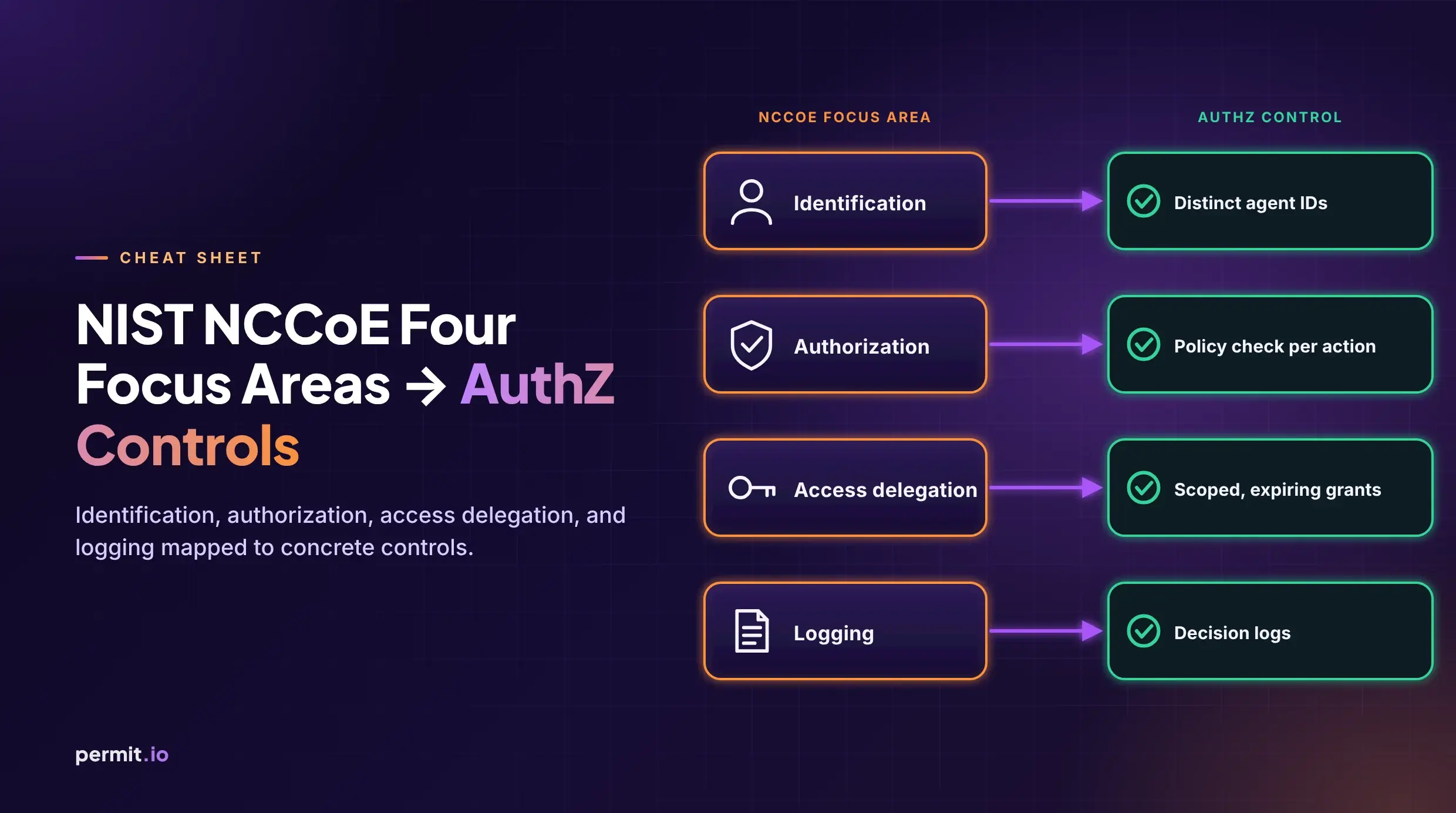
It is 2:13 AM. A customer reports that someone exported data they should not have accessed. You pull the Okta logs. Alice authenticated at 1:47 AM via SSO. MFA passed. Session valid. That tells you Alice signed in. It does not tell you why the application allowed her to export that specific report from that specific tenant.
The incident response stalls because authentication logs cannot explain authorization decisions.
Authentication logs do not explain authorization
Your IdP — Okta, Entra ID, Auth0, whatever — can tell you who authenticated and how identity lifecycle events changed: login events, MFA status, group membership changes, user deactivation. That is important evidence for identity controls.
But IdP logs generally cannot tell you why the application allowed a specific action on a specific resource. They cannot show that Alice was denied invoice.export on tenant acme-corp because her role was billing_viewer and export requires billing_admin. For application access controls, that second statement is often the evidence you need.
A boolean is not an explanation
{ "allowed": false } proves a decision happened. It does not explain why.
Authorization observability is not about generating more logs. It is about decision provenance: the chain from identity through context, policy, authorization data, to the decision and its enforcement.
A useful decision record might look like:
{
  "subject": "alice@example.com",
  "action": "invoice.export",
  "resource": "invoice:inv_123",
  "tenant": "acme-corp",
  "decision": "deny",
  "reason": "User has role billing_viewer; invoice.export requires billing_admin",
  "policy_version": "2025-02-12T10:41:00Z",
  "correlation_id": "req-abc123"
}
This is not literal Permit output — it is a recommended architecture for explainable authorization. Permit supports automatic decision logging with human-readable reasons. See the docs: Audit logs: types and filtering. For deeper inspection during development, Debug Mode shows the full decision path.
The point: for an allow, you want to understand why access was legitimate. For a deny, you want proof the control worked — especially after offboarding, privilege reduction, or role removal.
The authorization evidence chain
Authorization is not a single event. It is a lifecycle. Evidence should trace the full chain:
┌─────────┐    ┌─────────┐    ┌─────────┐    ┌─────────┐    ┌─────────┐
│  GRANT  │───▶│ ENFORCE │───▶│ CHANGE  │───▶│ ENFORCE │───▶│ REVOKE  │
└─────────┘    └─────────┘    └─────────┘    └─────────┘    └─────────┘
     │              │              │              │              │
     ▼              ▼              ▼              ▼              ▼
  Role assigned  Decision log   Role updated   Decision log   Role removed
  to Alice       shows allow    (promotion)    shows allow    from Alice
                 for action                    for new perms
                                                    │
                                                    ▼
                                              Later decision
                                              shows DENY for
                                              removed permission
Grant: Who gave access? Show role assignments, group mappings, tenant membership changes, approval records.
Enforce: Was access checked at runtime? Show the allow/deny decision with resource, tenant, policy, and enforcement point.
Change: Did permissions evolve? Show the role update, attribute change, or relationship modification.
Revoke: Did removed access stop working? Show the deactivation event, the authorization data update, and a subsequent deny for the removed permission.
A reviewer should be able to reconstruct any access decision from evidence, not from tribal knowledge or code archaeology.
Why application-code permissions destroy that evidence
If every service implements permissions differently — one checks role names, another checks ownership, a third hides authorization in business logic — your audit trail becomes fragmented. Months later, nobody can confidently explain why a sensitive action was allowed or denied. This is one reason to stop rebuilding permissions in application code and externalize authorization into a consistent layer.
Centralized policy creates centralized explainability
Externalizing authorization does not just centralize policy. It gives every enforcement point a common vocabulary for explaining decisions.
When authorization lives in scattered if-statements, evidence is scattered too. One handler logs roles. Another logs HTTP status codes. A third logs nothing. The audit trail is a patchwork.
When authorization flows through a shared policy engine, every decision can produce the same evidence structure: subject, action, resource, context, decision, reason. Fragmented if user.role == "admin" becomes fragmented evidence. Centralized policy becomes centralized explainability.
Agents make provenance even more important
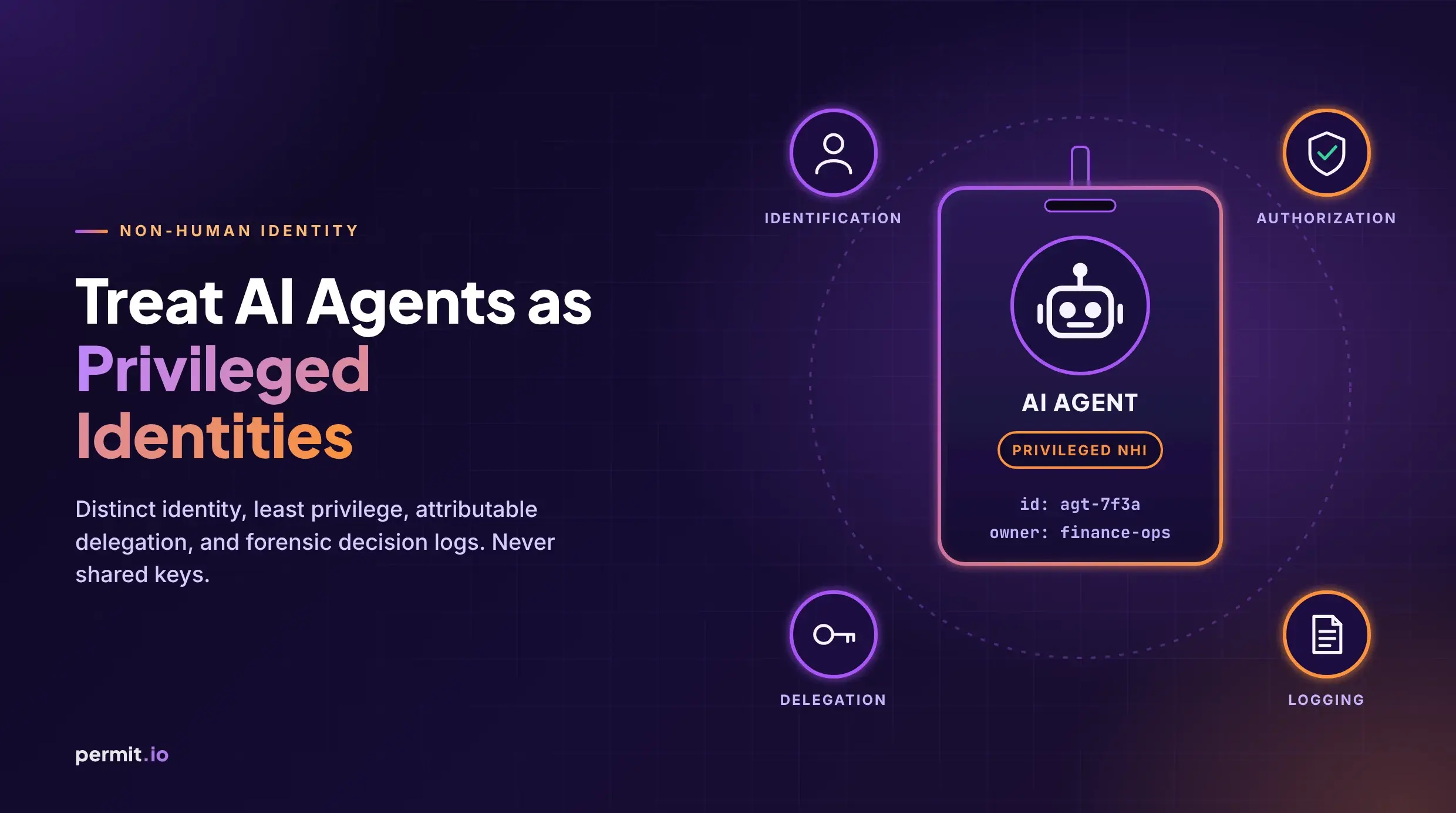
In an agentic world, the authorization chain gets longer. A human delegates to an agent. The agent calls a tool. The tool accesses a resource. The resource is protected by policy.
Now you need to answer: Which human delegated authority? Which agent acted? What tool did the agent invoke? What resource was accessed? What could the agent do versus what could the human do directly? Which policy governed the decision?
This is where decision provenance becomes critical. Prompt instructions are not enforcement. A runtime enforcement layer that can allow, deny, or route sensitive actions into an approval workflow — and produce evidence for later review — closes the gap between "the model was told not to" and "the system provably blocked it."
Permit's MCP Gateway is built around this requirement: agent identity, human identity, tool, MCP server, allow/deny decision — all logged with the same provenance model that applies to human-initiated actions.
The standard to aim for
A mature authorization system lets you answer: Can this principal perform this action on this resource? Where is that policy defined? Was the request allowed or denied? Why? Can we prove it later?
Authorization observability is decision provenance. Build the evidence chain from grant through enforcement through revocation. When someone asks "why was this allowed?" at 2:13 AM, you should have an answer that does not require reading application code.
Using Permit or any authorization platform does not automatically make your company SOC 2 compliant — compliance depends on your complete system design, policies, controls, and auditor review — but explainable authorization evidence strengthens access-review posture for any security program.