Teams appreciate shared agent memory because it seems to enhance productivity: one agent learns a repository's quirks, and everyone benefits. Products like MemBridge’s shared team memory make this workflow practical by maintaining useful context across sessions and users. However, teams often mistake this for a storage feature when it is actually about decision-making: determining who can write and read memory, and under what task context.
When memory extends beyond session boundaries, you're not just managing notes. You're handling delegated access to knowledge that may contain architecture details, internal file paths, hints related to credentials, and sensitive decision history. Essentially, shared coding-agent memory is a permissions issue disguised as a productivity tool.
A Runtime Authorization Model for Agent Memory
For shared memory, authorization must be checked at both retrieval and write times, not just during onboarding. The model should consider factors like project, teammate identity, repository, file path scope, session summary classification, role, revocation state, and task scope.
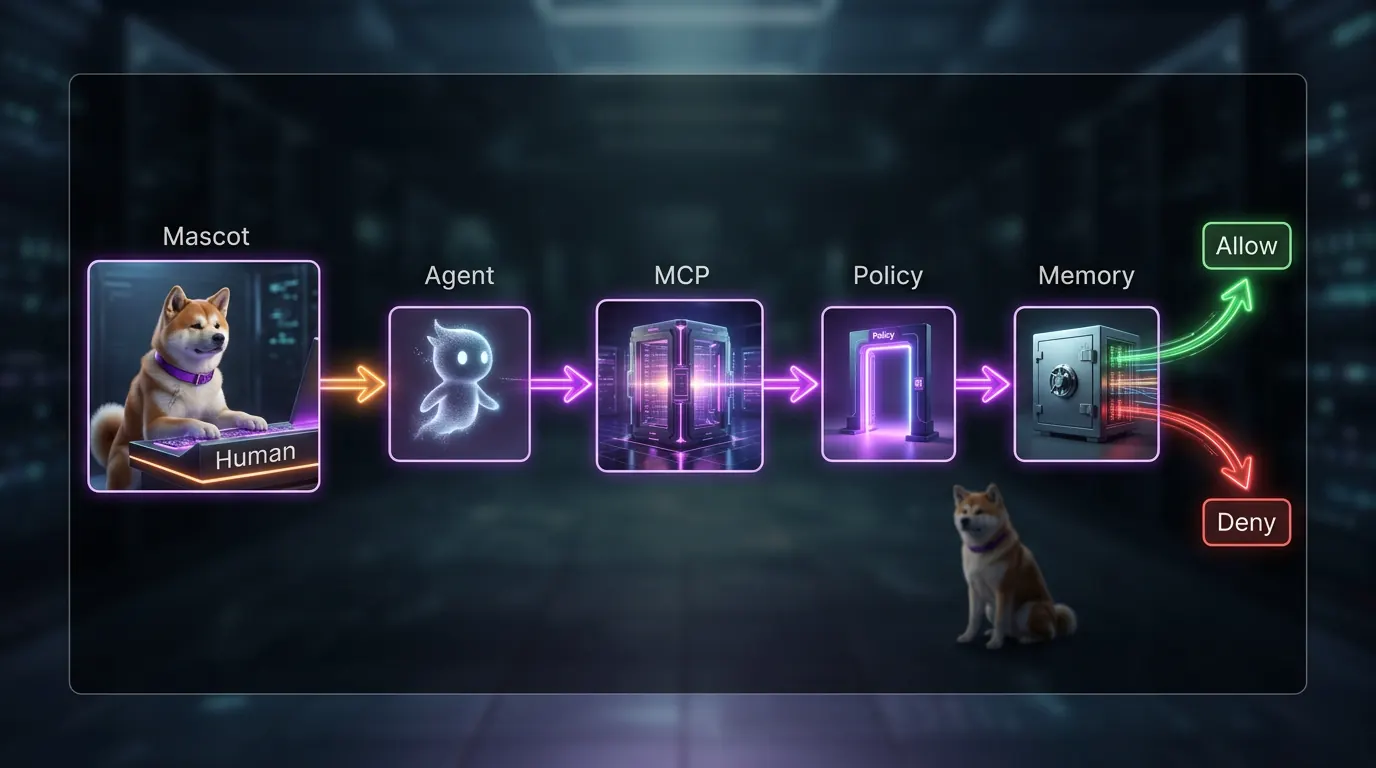
Think of it as a live policy tuple: this person, using this agent, in this project, for this task, can access this memory entry only if all current constraints are met. Current matters because revocation must take effect immediately; if a user loses access to a repository at 2:00 PM, they shouldn't retain memory access at 2:01 PM through cached context. This aligns with shared MCP configuration patterns, where capabilities are integrated across desktop, CLI, and IDE, requiring consistent control semantics at runtime, not per-client guesswork, as outlined in the OpenAI MCP documentation for shared Codex configuration.
Redaction, Encryption, and Runtime Authorization Are Not Interchangeable
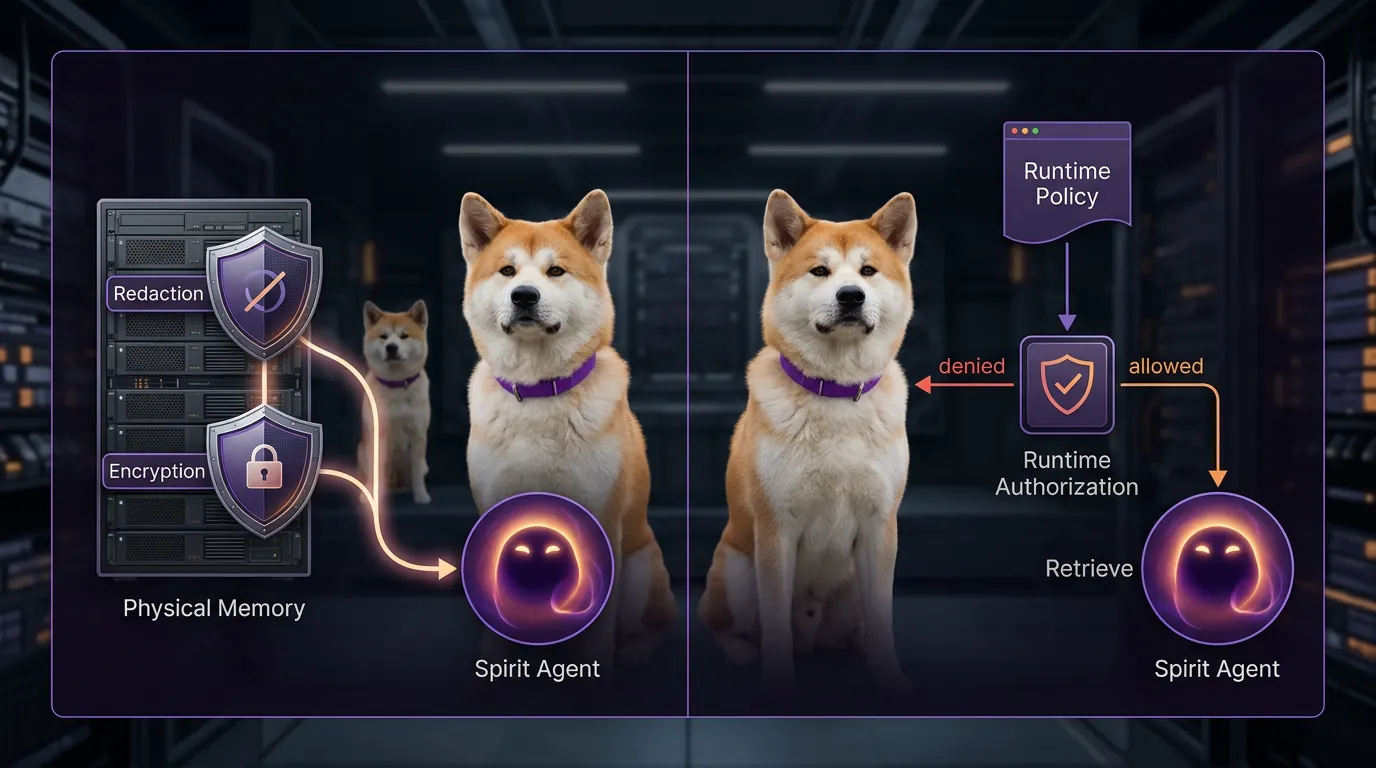
Redaction reduces risk by removing known-sensitive fragments before storage. It's helpful but fragile: it relies on pattern quality and can miss contextual secrets that don't match obvious patterns.
Encryption secures data at rest and in transit. It's essential for confidentiality but doesn't determine whether a specific person should see specific plaintext after decryption.
Runtime authorization controls, per request, whether access is allowed now. If redaction is about cleaning what we store and encryption is about protecting what we store, runtime authorization governs who can use what we store, right now, in this context. All three are necessary, but only the third enforces least privilege for shared memory retrieval.
ReBAC for Memory: Human -> Agent -> Team -> Project -> Memory Entry
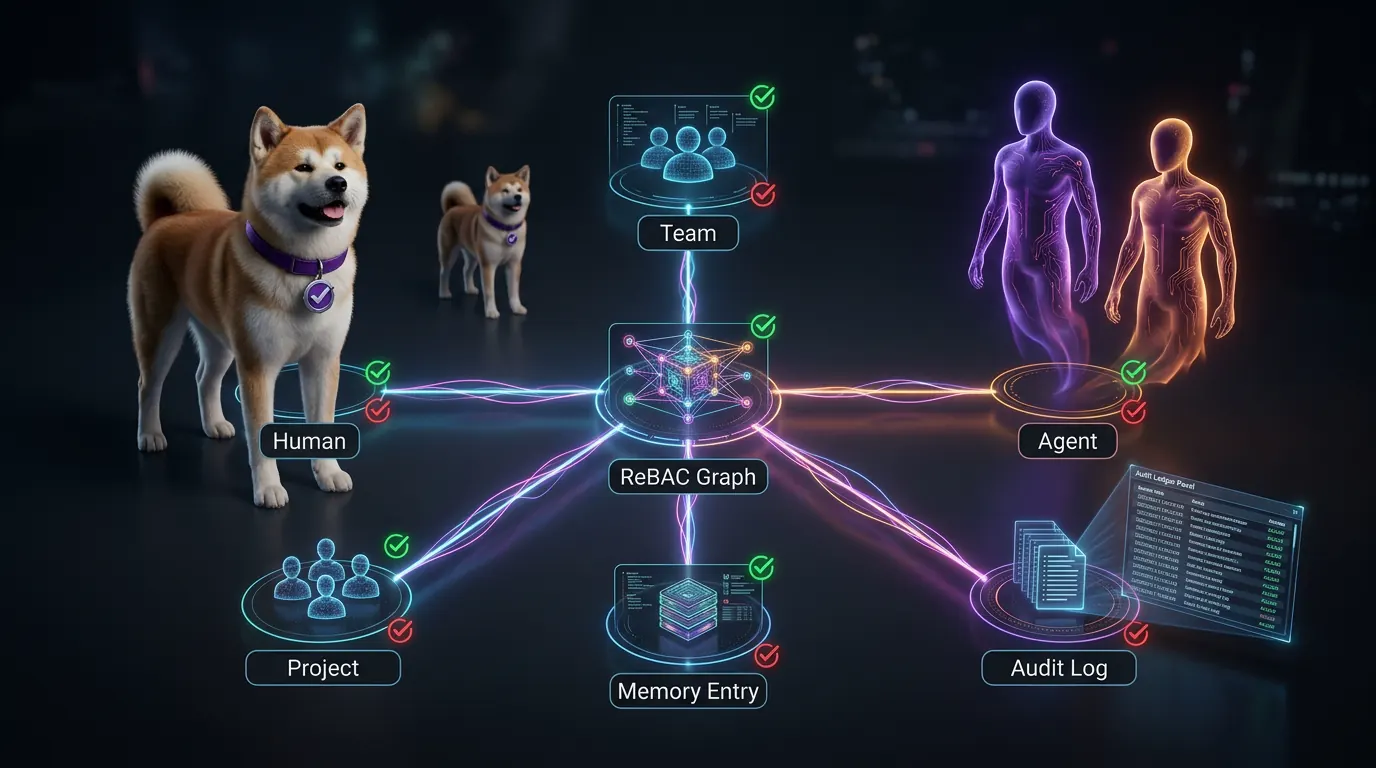
The clearest model is relationship-based access control. A human is connected to an agent as operator or delegator, the agent is linked to a team context, the team is associated with a project, and memory entries are tied to that project plus optional repository and path constraints.
This graph allows you to express real policies without reducing everything to role strings. For example, an agent may read a memory entry only if it acts on behalf of a human who is an active project member, whose team has repository visibility, and whose current task scope matches the memory entry’s tagged scope. ReBAC also simplifies revocation: remove or time-limit one connection, and downstream access collapses automatically.
Should Memory Servers Inherit Human, Project, or Agent Permissions?
Pure human inheritance is straightforward but can overexpose memory when agents handle multiple tasks or asynchronous workflows. Pure project inheritance is scalable but too broad for mixed-sensitivity repositories and path-level boundaries. Pure agent inheritance is convenient but risky, as long-lived agents can accumulate implicit standing privilege.
The safest approach is intersection-based delegation. Effective permission equals the intersection of human rights, project policy, and agent scope for the current task. This keeps memory servers useful without turning them into a side channel that bypasses source-of-truth access controls.
Why Permit Should Own Runtime Enforcement
Once you recognize that memory access is a runtime decision, the key requirement is a dedicated enforcement plane that can evaluate context-rich policies quickly and consistently across tools. This is where Permit should manage the runtime check path: policy authoring, decision-making, and auditable outcomes across the human-agent-memory graph.
Permit is not just a place to define permissions; it should be the runtime authority that every memory read and write calls before execution. This centralizes enforcement while allowing memory products, coding agents, and MCP servers to remain modular. It also provides security and platform teams with a single control surface for revocation, scope constraints, and policy evolution as agent workflows change frequently.
For each retrieval decision, the audit event should capture human, agent, project, query, memory entry, policy decision, and outcome as primary fields, with timestamps and policy version attached. Without this decision trace, teams cannot explain why an agent accessed something, why it was denied, or whether revocations were applied in time.
Frequently asked questions
How is shared memory different from a normal vector database?
A vector database is about storage and similarity search. Shared agent memory involves storage plus delegated authority, as retrieval can trigger real actions in code workflows. The critical issue is not finding a similar chunk, but whether this actor should access this chunk now.
Why can’t we just redact aggressively and call it done?
Redaction is preventive hygiene, not access control. Even perfectly redacted entries can reveal internal structure, roadmap intent, or sensitive operational context to the wrong person. You still need runtime allow or deny decisions tied to identity and task scope.
Where does revocation usually fail in agent memory systems?
Revocation often fails when access is cached too high in the stack and not re-checked at retrieval time. Teams revoke repository access but forget that historical memory remains readable through the agent. Runtime enforcement with fresh policy evaluation closes that gap.
Should memory be scoped to team or project by default?
Project should be the default boundary, with team as an additional constraint rather than a replacement. Teams change more quickly than project ownership models, and cross-team collaboration is common in engineering organizations. Project-first boundaries with path-level constraints are typically safer and easier to manage.
What does intersection-based delegation look like in practice?
Think of it as three simultaneous gates: human entitlement, project policy, and agent task scope. Access is granted only if all three are true at decision time. Any revoked connection or narrowed scope automatically collapses permission.
What are the minimum audit fields for a memory retrieval decision?
At minimum: human, agent, project, query, memory entry, policy decision, and outcome. In practice, you also want timestamp, policy version, and correlation ID to reconstruct full execution traces. If you cannot replay the decision, you cannot reliably investigate incidents.
How do Claude Code team memory and Codex shared memory change policy design?
They increase the likelihood that one memory substrate is queried across multiple client surfaces and task contexts. This means policy cannot reside only in one client plugin or workstation profile. Runtime enforcement must remain consistent across CLI, desktop, and IDE paths, with the same delegated-identity and audit semantics on every call.
Why place enforcement with Permit instead of inside each memory server?
Per-server authorization logic can drift, fork, and become difficult to audit consistently over time. A central runtime authorization layer keeps policy logic uniform while memory servers focus on retrieval quality and latency. This separation allows teams to move quickly without creating invisible privilege paths.