

Gabriel L. Manor
Can AI Generate Authorization Policy Safely?
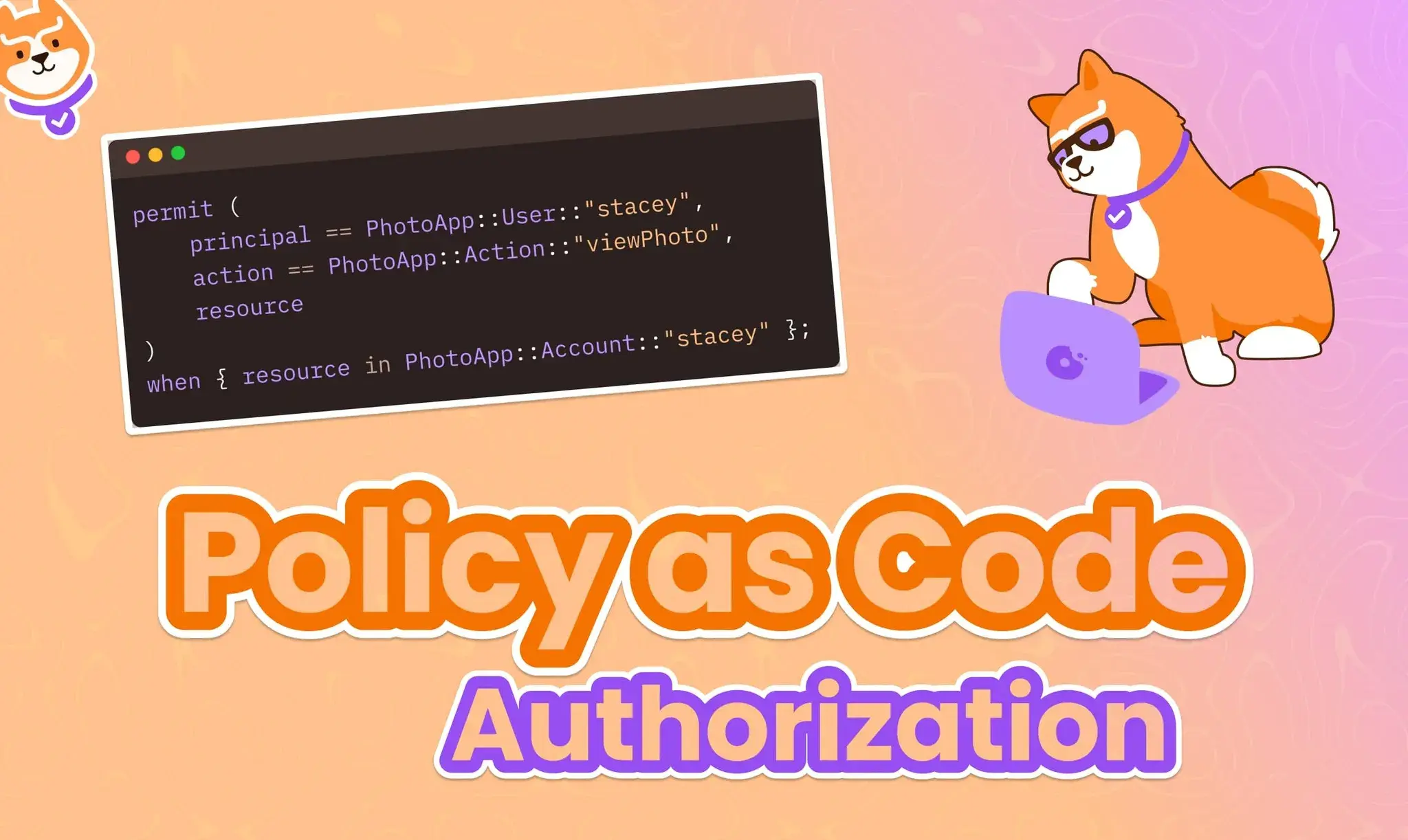
LLMs can draft authorization policy, but safe policy authoring for AI agents still depends on explicit intent, verifier-guided synthesis, and runtime PDP decisions on real tool calls.


Gabriel L. Manor
LLMs can draft authorization policy, but safe policy authoring for AI agents still depends on explicit intent, verifier-guided synthesis, and runtime PDP decisions on real tool calls.

Or Weis
RBAC is useful for coarse AI agent guardrails, but ReBAC is needed for delegated, tenant-aware, resource-level authorization. Learn when to use RBAC, ReBAC, and both for secure agentic systems.

Or Weis
Dive into the x402 protocol's mechanics, its role in enabling micropayments for AI agents, and how integrating authorization solutions like Permit.io ensures secure, fine-grained access in emerging digital economies.

Or Weis
ReBAC vs ABAC explained, with use cases, code, and examples. Model ReBAC in Permit.io with Terraform, and ABAC in Cedar, then choose the right fit for your app.

Or Weis
Compare OpenFGA and Permit.io for ReBAC, from models and UI to ABAC and ops. See which fits your team: self-hosted control or managed speed.

Or Weis
As AI agents become central to modern applications, traditional authorization models like JWTs fall short. Learn why dynamic, relationship-based access control and real-time policy engines are essential for secure agent workflows.

Gabriel L. Manor
Learn how to implement Prisma ORM data filtering using ReBAC (Relationship-Based Access Control) to control which database records each user can access, without manual filtering logic.

Or Weis
PBAC sounds great—until you try to use it. Learn the real challenges of Policy-Based Access Control and how to avoid common pitfalls.

Gabriel L. Manor
Learn how to add Supabase authentication and authorization to a fullstack Next.js app. This guide covers setting up Supabase Auth, implementing RBAC and ReBAC authorization, and enforcing access with Supabase Edge Functions and a Policy Decision Point (PDP).

Daniel Bass
Learn how to design your authorization model and architecture with real-world use cases, user management, approval flows, and AI identity support.

Gabriel L. Manor
A step-by-step guide to building a secure, multi-tenant app using Firebase for authentication and storage, and Permit.io for fine-grained authorization—learn how to manage permissions, enforce access control, and debug policies with audit logs.

Gabriel L. Manor
Learn how to build a React feature flag system using CASL and Permit.io. Dynamically manage feature access with Relationship-based access control (ReBAC) to enable fine-grained react permissions

Ekekenta Clinton
Learn how to implement advanced Django authorization with Relationship-Based Access Control (ReBAC) and Attribute-Based Access Control (ABAC) in this step-by-step implementation guide.

Or Weis
Discover how RBAC transformed access control, why modern apps need more context-driven solutions, and how Fine Grained Authorization (ABAC + ReBAC) extends it for today’s demands.

Gabriel L. Manor
Google Zanzibar provides fine-grained authorization, but managing it at scale remains a challenge. This article explores using DeepSeek to automate ReBAC tuple generation.

Gabriel L. Manor
Learn how to enhance Keycloak authorization with ABAC and ReBAC. Step-by-step guide to integrating Permit.io for fine-grained policies.

Daniel Bass
Learn how Open Policy Agent (OPA) is revolutionizing the way developers approach authorization. From managing policies with Rego to handling complex relationship-based access control (ReBAC) scenarios, discover practical OPA strategies, advanced use cases, and real-world insights.

Gabriel L. Manor & Daniel Bass
Discover how AI Identity is transforming Identity and Access Management (IAM). Learn to tackle hybrid identities, dynamic permissions, and proactive security with practical implementations.

Gabriel L. Manor
A step-by-step guide to building a secure, real-time chat app with React, Firebase, and Permit.io - learn how to handle user roles and set up Firebase for authentication and real-time messaging.

Bartosz Pietrucha
Learn how to implement enterprise-grade security for AI / LLM applications with Fine Grained Authorization (FGA) and Retrieval Augmented Generation (RAG)

Gabriel L. Manor
Discover the possible tradeoffs when building fine-grained authorization (FGA). Learn from a real-world use case how to examine such tradeoffs and build better software.

Daniel Bass
Externalizing FGA allows developers to focus on core application features, ensuring secure access control - A case study of Rivulis’ experience with FGA

Daniel Bass
Attribute-Based Access Control (ABAC) and Relationship-Based Access Control (ReBAC) - how to make the most suitable choice for your application?

Daniel Bass
Google designed its Zanzibar authorization system to handle its complex access needs. See how you can leverage this to create fine-grained ReBAC in your app

Daniel Bass
Learn best practices for managing user roles and access delegation and how to implement a cascading authorization model to enhance your app's access control.

Daniel Bass
If you've worked on authorization before, you know that sometimes standard policy models just aren't enough. What can we do then? Let's find out -

Daniel Bass
Protecting your user's personal medical information is vital in healthcare apps. Here's how to make sure you're doing everything to keep that data safe -

Daniel Bass
Get ready to rumble! Join us on a quest to find the best authorization policy model in an epic battle royale: RBAC vs. ABAC vs. ReBAC

Daniel Bass
ABAC vs. ReBAC - A comprehensive guide to the pros, cons, use cases, and implementation of these common authorization models

Daniel Bass
RBAC vs. ReBAC - A comprehensive guide to the pros, cons, use cases, and implementation of these common authorization models

Daniel Bass
Learn how to implement Relationship-Based Access Control (ReBAC) with OPA - an open source policy engine for controlling access to systems and resources.

Daniel Bass
What is Relationship Based Access Control, when should it be used, how can you implement it in your application, and how can you provide a UI for managing it?