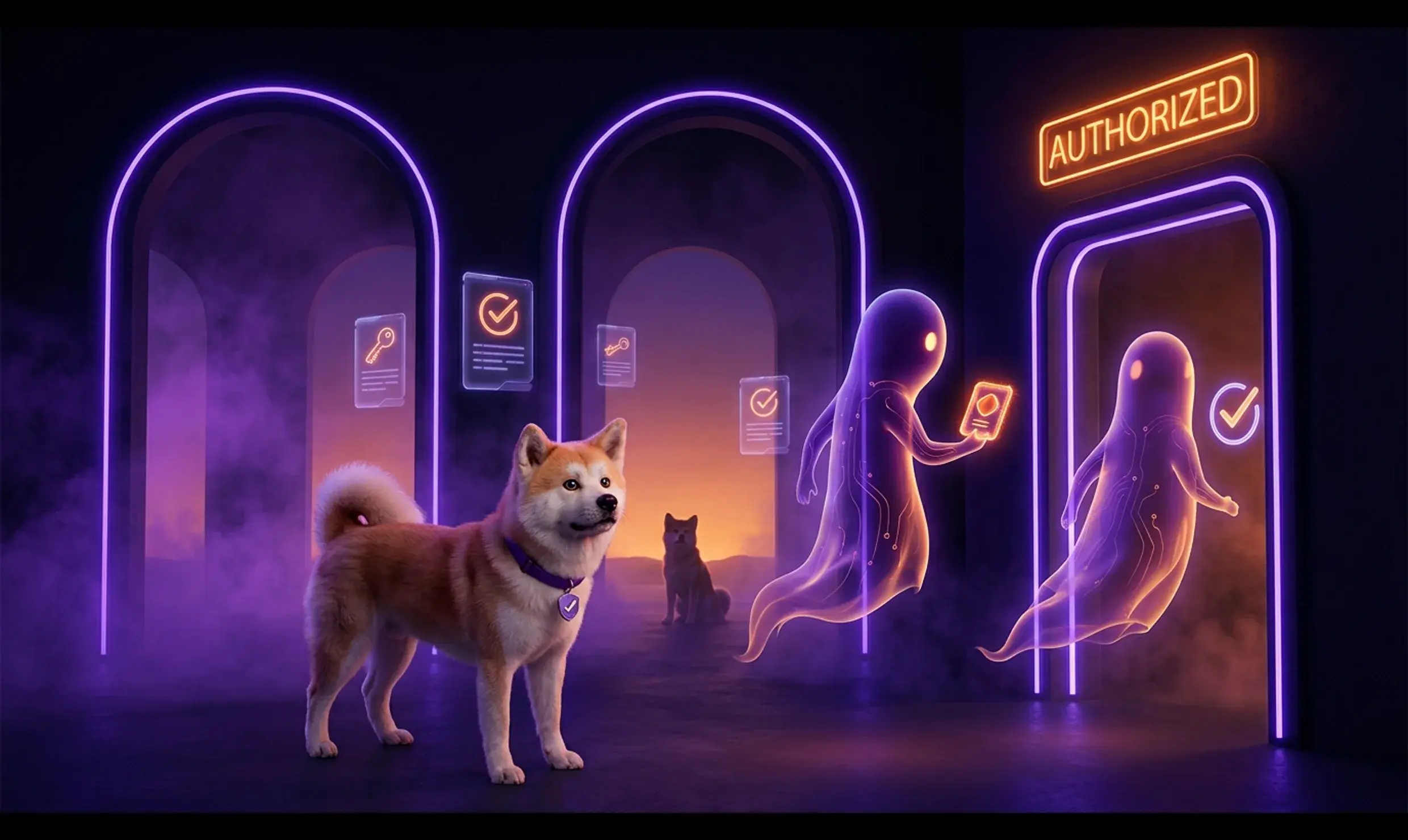
Better specs and PRDs make agents more accurate, but they do not make them safe. A detailed task spec can reduce hallucinations in code generation, yet the same agent can still open the wrong pull request, call a dangerous tool, or write to the wrong SaaS tenant if its permissions are broad and persistent. That is why zero standing permissions for AI agents is an emerging approach in modern coding-agent security.
As coding and automation agents move beyond “suggest code” into “execute workflows,” the blast radius expands quickly. A single agent run can touch source code, pipeline secrets, deployment controls, internal docs, customer records, and external APIs in one chain. Security has to follow the execution path, not just the model prompt.
The common failure mode is granting broad standing credentials and hoping the agent behaves. A safer model is the opposite: start with no standing authority, then grant short-lived access only when task intent, risk policy, and human delegation justify it. That is the architectural shift behind zero standing permissions.
Where coding and workflow agents actually operate
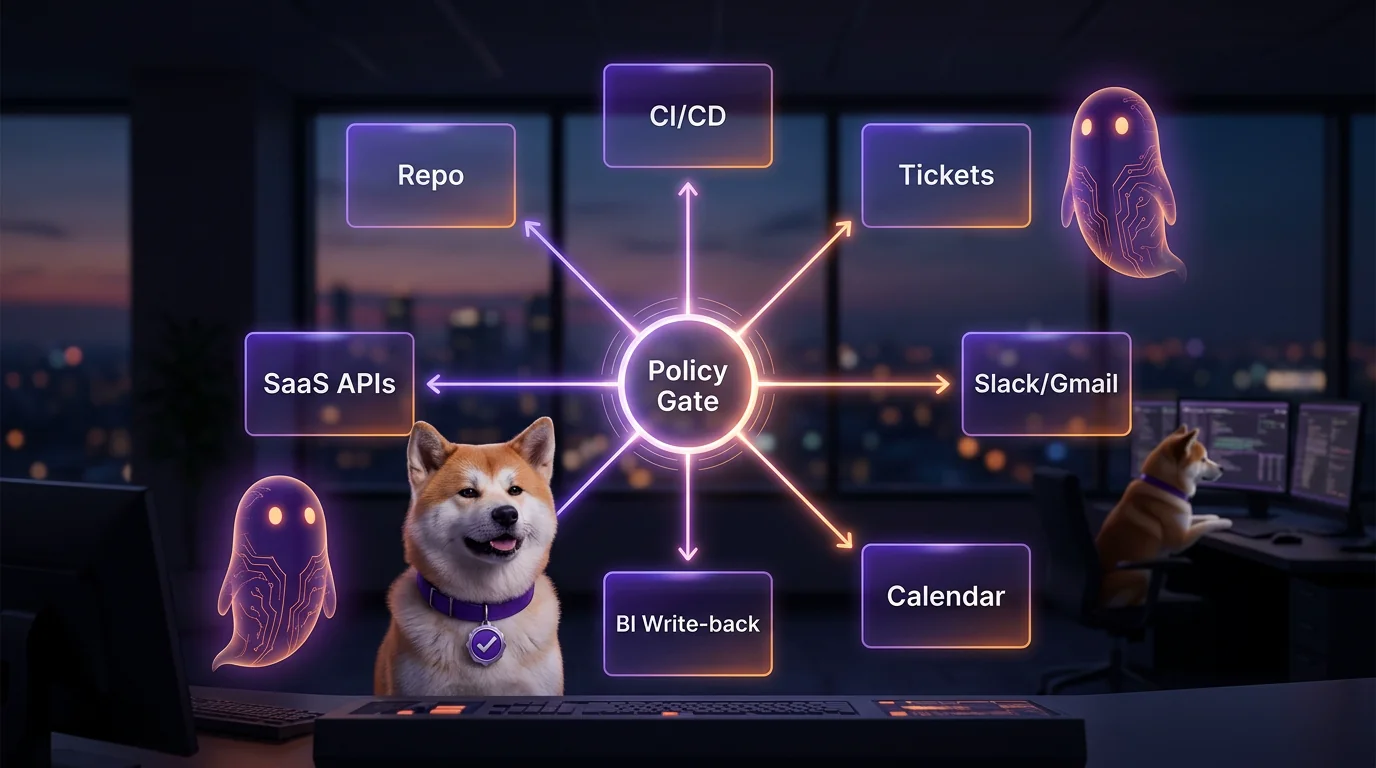
A practical interaction map for agent-enabled engineering teams includes:
- Repos and SCM: branch creation, commit signing, PR opening/merging, release tagging.
- CI/CD: pipeline triggers, artifact promotion, environment approvals, rollback actions.
- Tickets and planning tools: creating/updating issues, changing priorities/status, linking incidents.
- Chat and email: Slack channel posting, Gmail draft/send, pager escalation, stakeholder notifications.
- Calendars and meetings: scheduling maintenance windows and incident reviews.
- BI and analytics write-back: triggering corrective actions from dashboards (for example, Power BI write-back workflows as shown in Microsoft’s Power BI updates).
- SaaS APIs and internal MCP tools: CRM, billing, support, feature flags, data ops, and custom toolchains.
This is why automation-agent authorization must be a primary consideration from the outset. If an agent can execute across these systems, it needs tightly scoped, revocable, and continuously evaluated authority.
PRDs and specs improve correctness, not authorization
Strong requirements are still essential. Clear acceptance criteria, constraints, and task decomposition make PRD-driven agents more predictable and reduce retries. Teams using structured templates (for example, these PRD/spec templates for AI agents) often see better implementation fidelity and fewer unintended changes.
But specification quality is not permission control. A PRD can say “update deployment config only in staging,” yet if credentials allow production deploy rights, intent loses to capability. Specs reduce ambiguity and inform policy; policy enforces boundaries.
In practice, treat specs as intent artifacts that feed authorization decisions. A spec-workflow MCP pattern can extract task intent (resource, action, environment, risk level) from the PRD and pass it to policy checks before any tool call. This creates a separation of concerns:
- Spec/PRD answers: what should be done and why
- Authorization policy answers: what is allowed now, by whom, on which resource, under which conditions
That separation is what keeps agent behavior safe under real-world drift, tool sprawl, and changing business risk.
Credential models: static keys vs delegated, short-lived authority
For agents that touch GitHub, Slack, Gmail, CI/CD, and BI write-back functions, credential strategy determines your real risk posture.
| Model |
Strengths |
Weaknesses |
Best use |
| Static API keys |
Easy to start |
Long-lived, hard to rotate, weak attribution, often over-scoped |
Legacy integrations only |
| AI agent service accounts |
Better separation from human identity, can be scoped |
Still risky if permissions are broad and standing |
Non-interactive machine tasks with strict scope |
| OAuth scopes + delegated access |
User-context actions, revocable grants, potentially finer scope depending on implementation |
Scope design can still be coarse; consent fatigue |
Cross-SaaS workflow actions |
| Runtime policy decisions + short-lived tokens |
Least privilege per task, conditional checks, strong auditability |
Requires policy infrastructure and integration effort |
High-assurance agent execution |
The core shift is from “agent has permission” to “agent receives permission just in time.” Prefer short-lived agent credentials over copied human tokens or long-lived secrets. Use delegated access where user intent matters (e.g., “send this Slack update as on-call lead”), and combine it with runtime checks for environment, data sensitivity, and change risk.
This is also relevant for teams exploring local models: local inference can reduce data egress concerns, and local hosting can mitigate some access control issues but does not inherently solve tool misuse, as discussed in this guide to local AI models.
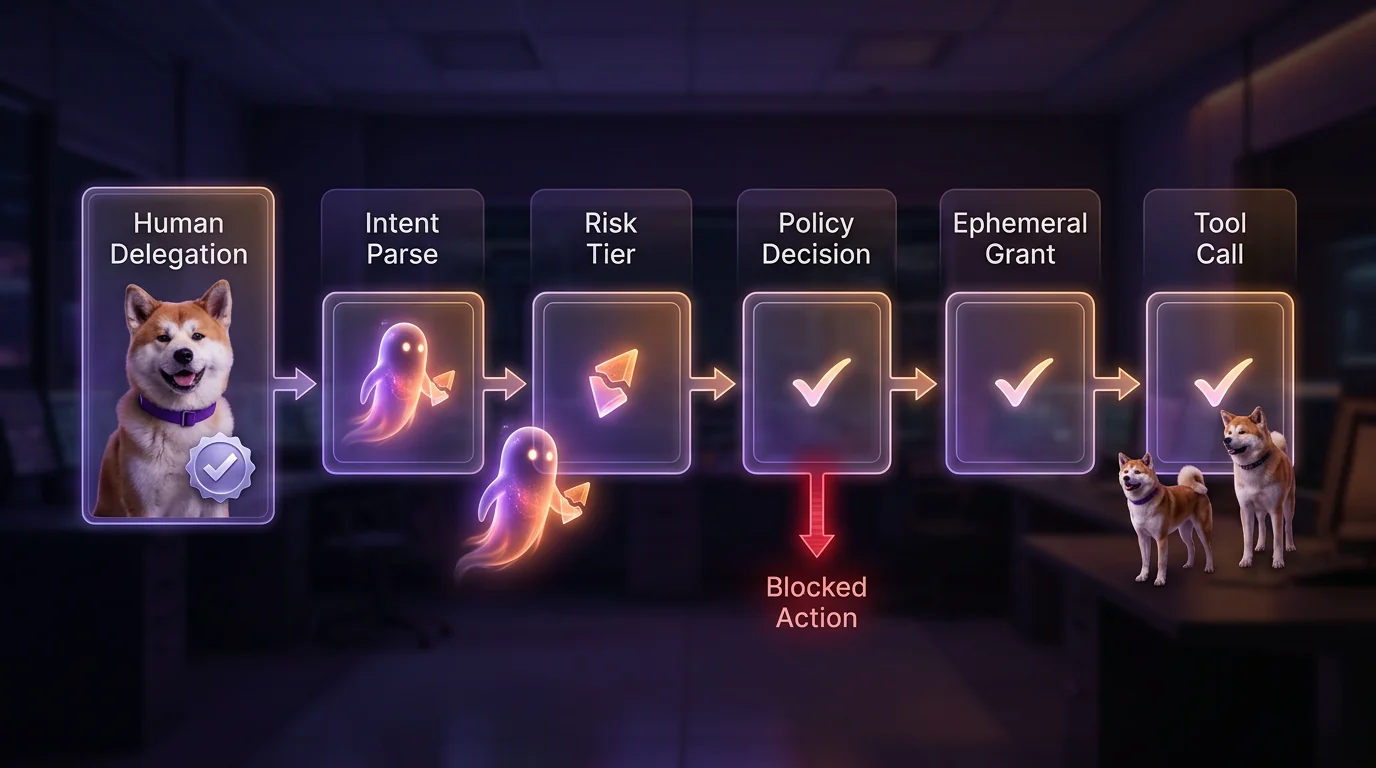
A just-in-time authorization flow for coding and workflow agents
A safe execution pattern is:
- Human delegation event: A user approves a task (ticket, PR comment, chat command, runbook trigger).
- Intent extraction: Agent/runtime parses spec/PRD into structured intent (action, resources, environment, urgency).
- Risk classification: Classify tool calls (read, write, deploy, notify, financial impact, data sensitivity).
- Policy decision: A runtime control plane evaluates user delegation, agent identity, task intent, and risk.
- Ephemeral grant issuance: Mint narrowly scoped, short-lived credentials for only the approved actions.
- Step-up controls when needed: Require additional approval for privileged transitions (e.g., staging → prod).
- Execution with continuous checks: Re-evaluate at each high-risk tool boundary; revoke on drift or timeout.
- Comprehensive logging: Record decision inputs, grants, actions, and outcomes for forensics and compliance.
At this layer, a control plane such as Permit.io can serve as the policy engine that grants just-in-time authority from human delegation, task intent, tool risk, and policy state. This model supports secure MCP-based tooling regardless of model vendor or IDE agent.
For neutral implementation examples, teams hardening secure Cursor MCP and secure Claude MCP deployments typically apply the same pattern: never hand the agent broad standing secrets, broker each MCP tool call through policy, and issue ephemeral credentials per task step.
If you are designing broader no-code/low-code orchestration around agent actions, landscape scans like Zapier alternatives for automation builders and n8n alternatives for workflow orchestration are useful reminders that tool diversity increases the need for centralized authorization decisions.
Audit schema for agent actions: what to capture and why
Good agent audit logs must connect identity, intent, authority, action, and outcome in one chain. If any link is missing, incident response and governance become guesswork.
A practical audit schema should include:
- Human actor: who delegated, approved, or initiated (user ID, role, session, MFA state).
- Agent identity: which agent version/run acted (agent ID, model/runtime, build hash).
- Spec/task context: PRD/ticket/runbook identifiers, declared objective, risk label.
- Tool invocation: MCP tool name, endpoint, resource ID, action type, parameters fingerprint.
- Policy evidence: decision ID, policy version, matched rules, allow/deny reason, obligations.
- Credential evidence: token type, scopes/claims, issuance time, expiry, issuer, key ID.
- Execution outcome: success/failure, diff artifacts, PR/commit IDs, deployment IDs, side effects.
- Environment context: repo/org/project/tenant, environment (dev/stage/prod), source IP/runner.
- Timing chain: request, decision, execution, completion timestamps for causality reconstruction.
This schema should be queryable across systems so you can answer: “Which human approved this deploy, which agent executed it, under what policy, with what token, and what changed?” Without that, you cannot reliably prove least privilege, investigate abuse, or improve controls over time.

Frequently asked questions
How do you secure AI coding agents that use MCP tools?
Treat each MCP tool call as a privileged action, not as a harmless extension function. Put a policy decision in front of every write-capable call and issue ephemeral credentials only for the specific resource/action pair. That approach enforces least privilege even when the agent is highly capable and multi-step.
Should coding agents use long-lived API keys or short-lived delegated access?
Use short-lived delegated access whenever possible. Long-lived keys are easy to leak, hard to attribute, and typically over-scoped, while short-lived grants can be tightly bound to task intent and automatically expire. If service credentials are unavoidable, scope them narrowly and rotate aggressively.
How do specs and PRDs change agent authorization?
Specs and PRDs should inform authorization, not replace it. They provide machine-readable intent that policies can evaluate, such as allowed environment, target systems, and risk class. In other words, specs improve execution accuracy, while runtime authorization enforces safety boundaries.
How can workflow agents safely access Gmail, Slack, GitHub, CI/CD, or BI write-back functions?
Use per-tool delegated scopes, step-up approval for high-impact actions, and environment-aware restrictions (for example, read-only by default in production contexts). Broker access through a centralized policy layer so different SaaS connectors follow the same guardrails. Require explicit justification and audit capture for write-back or deploy actions.
What should an audit trail for coding-agent actions include?
At minimum: delegating human, agent identity/version, task/spec reference, tool/resource/action, policy decision evidence, token scope/expiry, and outcome artifacts. Include timestamps across decision and execution to reconstruct causality. Strong audit trails are what turn policy into verifiable control.
Where do AI agent service accounts still make sense?
They are useful for narrow, non-user-context machine tasks such as indexing docs or running scheduled read-only checks. The key is to keep privileges minimal and avoid using one account for unrelated workflows. Pair service accounts with runtime policy and short token lifetimes to reduce standing risk.
How do secure Cursor MCP and secure Claude MCP patterns differ in practice?
Operationally, they should not differ much in security architecture. Both benefit from the same controls: no copied human credentials, just-in-time token issuance, per-tool policy checks, and complete auditability. Vendor/model choice affects ergonomics and performance more than core authorization design.