


Loading
3366 Members
 Join Permit's Slack
OpenID Authorization API 1.0, known as AuthZEN, is the standard way a Policy Enforcement Point (PEP) asks a Policy Decision Point (PDP) whether a subject may perform an action on a resource. Mattia, writing at iamops.dev as Argo, published a short explainer and two labs that apply that split to MCP tool calls: first with OPA behind a thin AuthZEN endpoint, then with a Permit PDP. This is the highlights version. The runnable Permit lab is on iamops.dev. For the wire format and working PEP code, see our AuthZEN Authorization API tutorial.
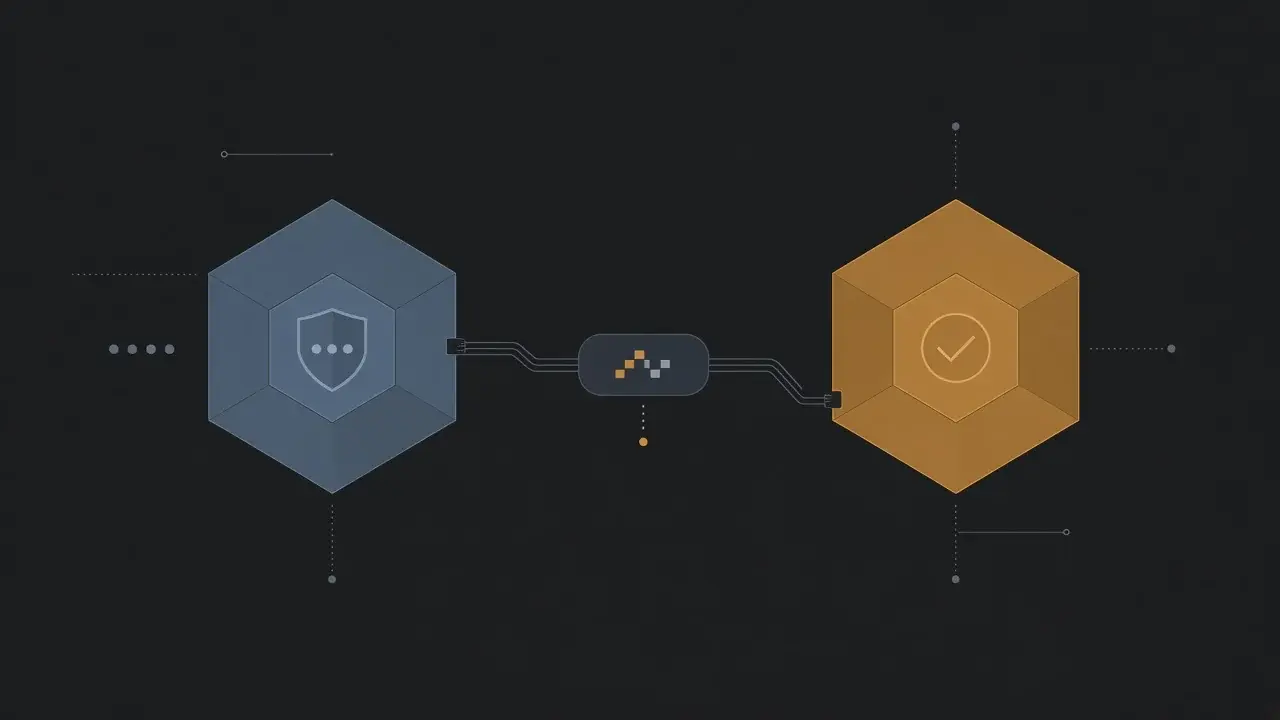
What is AuthZEN? AuthZEN is the OpenID standard for the conversation between the code that blocks a call (the PEP) and the engine that answers yes or no (the PDP). The PEP does not need to know how the PDP stores or evaluates policy. That is why you can change the engine without rewriting the gateway.
true or false. The PEP allows the call only on true. If the PDP is unreachable, the PEP has to treat that as a deny.tools/call. A $90 payment against a $50 limit came back as decision: false. An unknown tool, a missing scope, and an unconfirmed payment were refused too. When OPA was stopped, the shim returned no HTTP answer, which is why the enforcement point has to fail closed.For a long time, every policy engine spoke a different API. Swapping the PDP meant rewriting the gateway. AuthZEN fixes the request and response contract between PEP and PDP. The policy model, the data model, and the decision engine stay implementation choices. We walked through that contract, the five HTTPS endpoints, and discovery metadata in the AuthZEN tutorial. The broader PEP and PDP split is in PEP, PDP, and decision logs.
That matters more once AI agents start calling tools. A model can propose a tools/call. It should not be the thing that decides whether the call is allowed. The enforcement point builds the question from the verified session: the agent, the tool, the resource, the amount, the confirmation. Then it asks a PDP. The model does not get to fill in its own identity or a fake confirmation flag.
The iamops.dev explainer starts with an agent that wants to edit a contract draft. The PEP asks. The PDP answers. OPA can sit behind that question and answer in Rego. Cedar can sit behind the same question and answer with a permit or a forbid. The AuthZEN request does not change.
A few details from that piece are easy to miss:
The first lab builds the split with open-source parts: a Rego policy, six unit tests on OPA 1.22.4, and a small Python endpoint that answers POST /access/v1/evaluation and serves /.well-known/authzen-configuration.
The policy is deny by default. Reading tools need their scope. A tool that moves money needs the scope, an amount at or under the agent's delegated limit, and a user confirmation. Money is in US cents. The agent may pay up to 5000 cents, which is $50.
What the run showed:
opa eval and the AuthZEN endpoint agreed: 9000 cents against a 5000-cent limit is decision: false, with a reason such as "over delegated limit". 4500 cents with confirmation is allowed.delete_account were all refused, with reasons that can stack.decision: false to enforce. A gateway that waits for true can treat that as a deny. A gateway that only blocks on an explicit false would let the call through.The lab is careful about what it is not. The endpoint is a teaching shim: it does not authenticate callers, does not validate input, and has no batch or search API, so it is not a conformant PDP. A real MCP gateway was not used as the enforcement point. AuthZEN conformance tests were not run.
The gotchas are the ones I would want on a design review list. Unknown tools need no special rule if the default is false. user_confirmed is only as good as the enforcement point that sets it. A model must never be able to fill it in. And default deny is a choice you should make on purpose.
The second lab, the one we are linking, rebuilds the same payments scenario with Permit. Mattia used the Community plan, created the policy through the Permit API, and pointed a small PEP at a local Edge PDP (permitio/pdp-v2).
The mapping follows our MCP Gateway architecture: the MCP server is a Permit resource type, each tool is an action on that type, and the subject is the agent. The amount and the confirmation go in resource.properties. As shared in our PDP overview, the PDP reads tenant from there and passes the other keys to the policy as resource attributes.
The policy used roles plus one ABAC rule. A reader role could call the two read tools. A writer role could call send_payment only when amount_cents was at or under the agent's limit_cents and user_confirmed was true.
What the run showed:
get_balance found both agents, because both held the reader role. An action search returned an empty list in this run. The lab notes that as an Edge PDP quirk when tenant is in resource.properties.delete_account the PDP returned no_such_action, because that tool is not an action on the resource. The agent was told only denied: policy. The reason codes stayed in the log, which is the right split: an agent that can read its limit can learn to split a payment under it.pdp error HTTP 403. A corrected PEP, re-run on 24 November 2026, validates the amount and the confirmation, and stops before any request if no key is set, so the agent sees denied: no PDP key configured and the 403 never leaves the machine. A stopped PDP still ends in pdp unreachable. The log distinguishes those errors from decision false. The re-run matched the earlier six-call results, and also denied a string "false" and a negative amount.ABAC is not supported yet in the Cloud PDP and the code NOT_SUPPORTED. The balance read still worked on the role. The confirmed $45 payment did not. That is the safe direction today. Cloud PDP ABAC support is coming soon, so for now an ABAC limit rule belongs on the Edge PDP or Nexus PDP, or it will look like a broken policy.A few more notes from the lab, checked against our docs where they are product claims:
permit.check() rather than AuthZEN. AuthZEN is how another PEP talks to the same PDP. If the PDP does not answer, the gateway refuses the request (JSON-RPC -32005). A plain denial is -32004.tools/list is not filtered. The gateway returns every upstream tool and enforces on each call, so an agent can see a tool it cannot use. That is documented, not a lab surprise.GET /.well-known/authzen-configuration answers without a token. Evaluation still requires a bearer token. The container PDP requires the bearer header on every AuthZEN endpoint, including discovery.The lab did not run the hosted Permit MCP Gateway. It ran its own small enforcement point, on the Community plan, to test the AuthZEN call. The hosted gateway runs its own SDK check.
Permit PDPs implement AuthZEN 1.0 directly. You do not need a teaching shim to get evaluation, batch evaluations, search, or discovery. Any AuthZEN client can send requests to a Cloud PDP, an Edge PDP, or a Nexus PDP. Nexus is generally available. AuthZEN endpoints evaluate the same policies as the other PDP endpoints, so a policy change in the dashboard or API applies after it reaches the PDP.
Where the lab lines up with the product:
What the lab and the standard do not cover:
permit.check(), not AuthZEN, to talk to the same PDP. The lab did not run that path. It tested a custom AuthZEN PEP against the same decision point.If you want the PEP code and the five AuthZEN endpoints in one place, start with the tutorial. If you want to replay the payments scenario against a Permit PDP, use the iamops.dev lab. To try AuthZEN against a Permit PDP in your own environment, start with a free account or talk to our team.
What is AuthZEN? AuthZEN is the OpenID Authorization API 1.0, a Final Specification as of January 12, 2026. It standardizes how a Policy Enforcement Point asks a Policy Decision Point whether a subject may perform an action on a resource, and how the PEP discovers who or what else would be allowed.
Why does AuthZEN matter for AI agents? An agent can propose a tool call. A separate enforcement point should ask a policy engine before the tool runs, using a verified subject, action, resource, and context. AuthZEN is the standard API for that question, so the gateway does not have to be rewritten when you change the engine.
Does Permit support AuthZEN? Yes. As shared in our PDP overview, Permit Cloud, Edge, and Nexus PDPs implement the OpenID AuthZEN Authorization API 1.0, including evaluation, batch evaluations, search, and discovery. Any AuthZEN client can send authorization requests to a Permit PDP.
Which Permit PDP should I use for attribute rules such as payment limits?
An Edge PDP or a Nexus PDP. Today the Cloud PDP does not evaluate ABAC policies yet; support is coming soon. Role checks still work on the Cloud PDP. For now, a limit rule that compares amount_cents to limit_cents needs the Edge PDP or Nexus PDP.
What happens if the PDP is unreachable?
The PEP has to treat a missing decision as a deny. Waiting only for an explicit decision: false can fail open. Permit MCP Gateway refuses the request if the PDP does not answer.
What did the iamops.dev Permit lab actually run? A small AuthZEN PEP in front of a Permit Edge PDP, on the Community plan, with the same payments scenario as the OPA lab. It did not run the hosted Permit MCP Gateway. The write-up and commands are in the lab.

Co-Founder / CEO at Permit.io