TL;DR: Hermes Agent is an open-source, self-hosted personal agent from Nous Research that remembers you across sessions, talks to you over Telegram, Slack, WhatsApp and more, runs scheduled jobs, and can split into several named Bots. Its security docs describe eight layers, and its approval defaults get the hard case right: when a cron or webhook run hits a dangerous command and nobody is there to approve it, the default is deny. Those approvals match dangerous command patterns, though. They do not express "this Bot, acting for this person, may send this email to this recipient." Put that decision in policy outside the agent, with one log across Bots. Our Software Factory Security page shows how.
What is Hermes Agent, and what can it touch?
The Hermes Agent docs describe it as "the self-improving AI agent built by Nous Research." It creates skills from experience, improves them as it uses them, and "builds a deepening model of who you are across sessions." It runs wherever you put it, from a small VPS to serverless infrastructure, and you talk to it from Telegram, Discord, Slack, WhatsApp, Teams, and other messaging platforms.
The feature list is broad: more than 60 built-in tools, persistent memory, MCP integration, voice, and scheduled tasks. The part that makes Hermes a fleet product is Bot Mode: "Named Bots with their own model, memory, skills, routines, and chats."
Memory lives in curated files (MEMORY.md and USER.md) that are injected into the system prompt at session start. Cron jobs run on a schedule and deliver results to your messaging platforms.
What does Hermes ship for security?
The security guide calls Hermes "a defense-in-depth security model" and lists eight layers: user authorization (allowlists and DM pairing), dangerous command approval, file write safety, container isolation, MCP credential filtering, context file scanning for prompt injection, cross-session isolation, and input sanitization.
Two details stand out.
Memory entries are scanned before they are accepted, "since they're injected into the system prompt." Content that matches prompt injection, credential exfiltration, or SSH backdoor patterns is blocked. Persistent memory is an obvious place for an injection to hide, so this matters.
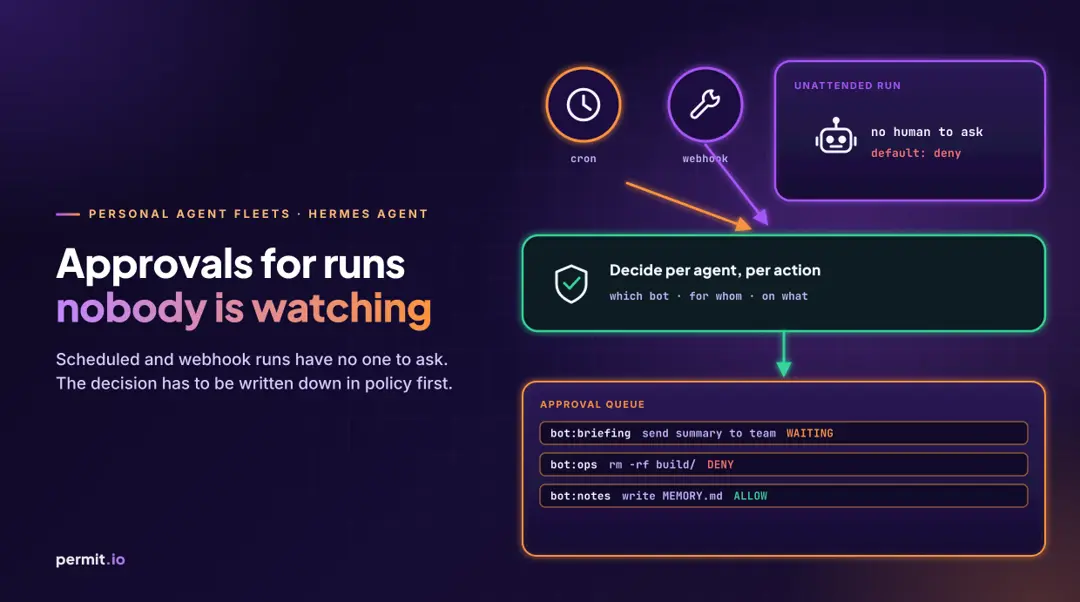
The approval settings are written for unattended runs. approvals.mode can be smart, manual, or off. Separately, cron_mode defaults to deny: when a scheduled job hits a dangerous command, "deny blocks the command (the agent must find another path)." unattended_mode does the same for webhook and API sessions, because "these surfaces have no human who can answer /approve."
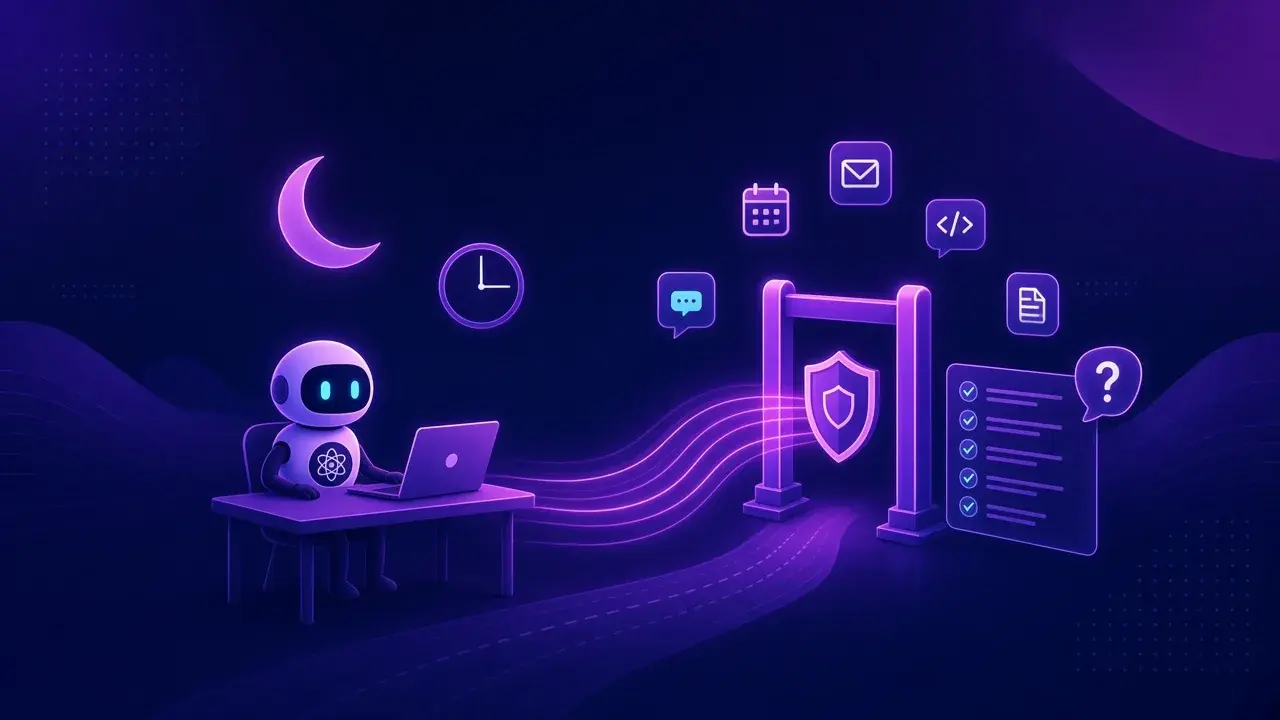
Most agents are designed around a person watching. Hermes is explicit about what happens when nobody is.
We looked at another part of this design, Blank Slate and toolset pinning, in zero standing permissions for AI agents.
What do pattern-based approvals leave open?
Dangerous command approval checks commands against a curated list of risky patterns. That catches rm -rf and similar commands. It is not built to answer questions about business actions:
- May the briefing Bot email a summary to an outside address?
- May the ops Bot call this API with this token for this task?
- May any Bot read a customer record, or only the support Bot?
Those are authorization questions. They depend on which agent is asking, for whom, in which workflow, against which resource. A command allowlist cannot express them.
Shared chats add one more wrinkle. The approvers setting defaults to ["*"], which the docs describe as "any admitted member" of a messaging chat. If you bring a Hermes Bot into a group, restrict who can approve.
Why do named Bots make this a fleet problem?
Bot Mode turns one install into several agents with their own memory and routines, often all running on your accounts and your machine. Add the agents you run from other vendors, and the five fleet problems show up:
| Fleet risk |
How it shows up |
What fixes it |
| Standing access |
Each Bot keeps its tools and tokens between runs |
Deny by default, grants per workflow |
| Delegated identity |
Downstream systems see your account |
An identity per Bot, bound to you |
| Intent drift |
A self-improving skill drifts from its first purpose |
Declared intent checked on each call |
| Prompt injection |
Email, web pages, or memory carry instructions |
Policy outside the model |
| Audit |
Each Bot and each vendor keeps its own record |
One decision log |
How does Software Factory Security apply to Hermes?
Software Factory Security was written for fleets of AI coding agents. As shared in our docs, its controls are: give every agent its own identity delegated from a human, deny by default, check every call against policy outside the model, stop risky steps for a person, and keep one decision log.
Hermes already covers part of this inside the install. The rest belongs at the systems your Bots reach:
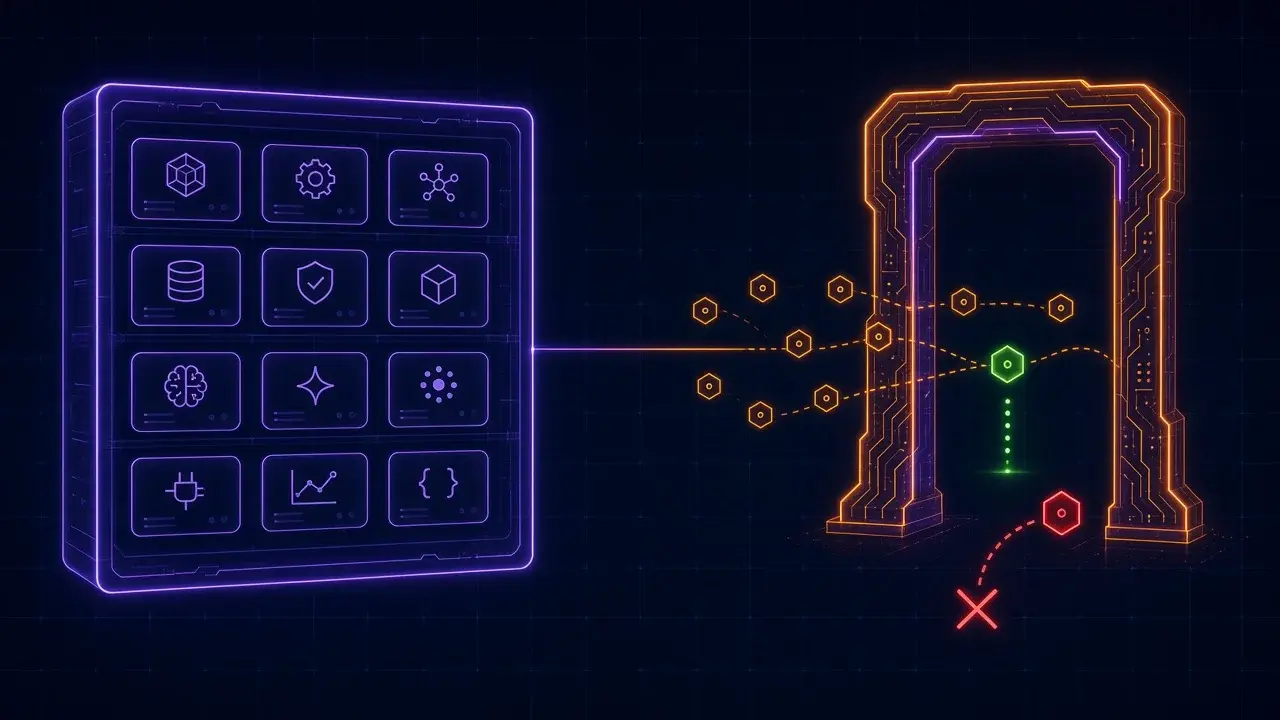
- Hermes supports MCP. For tools reached that way, Permit MCP Gateway sits between the client and the server, authenticates the person behind each agent, checks every tool call against policy with a trust ceiling per tool, and logs the decision. Upstream credentials stay in the gateway's vault.
- For APIs your Bots call directly, an HTTP egress proxy and PDP decide whether a delegated token may reach an endpoint.
- In your own apps and data, the Permit PDP treats each Bot as its own subject.
For the unattended case specifically, the gateway's approval rules can hold a call as pending for an approver instead of failing the run (as shared on our SFS page), with rejection on timeout. Our human-in-the-loop guide covers how to pick which actions should wait for a person. As shared in our docs, "Revoke the human and every agent acting for them loses access on its next call," which is a useful property when one install hosts several Bots.
The full architecture is in the Software Factory Security blueprint.
A checklist for running Hermes Bots as a fleet
- Keep
cron_mode and unattended_mode on deny unless you have a specific reason.
- Restrict
approvers in any shared chat.
- Use allowlists and DM pairing on every messaging platform.
- Run Bots that do not need the host in a container backend.
- Give each Bot a narrow toolset and its own credentials where you can.
- Put a per-Bot policy check in front of shared tools and APIs, with human approval for sending, paying, and deleting.
- Keep one decision log across Bots and vendors.
Where to start
Find the Bot with a cron job and an outbound channel (email, Slack, a public API), and put its outbound calls behind a policy and a log. The Software Factory Security page explains the five controls.