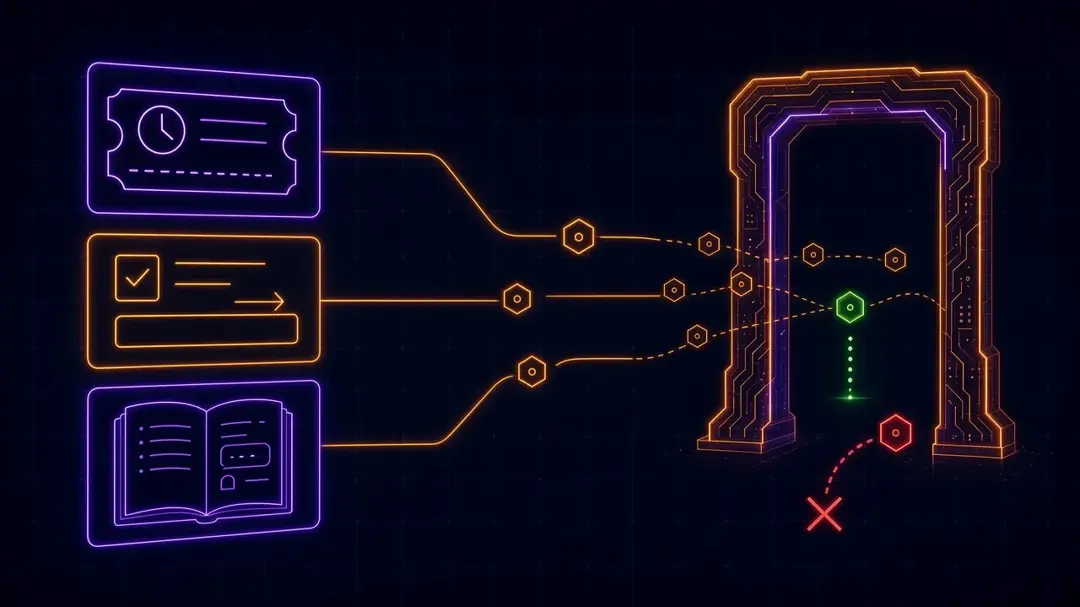
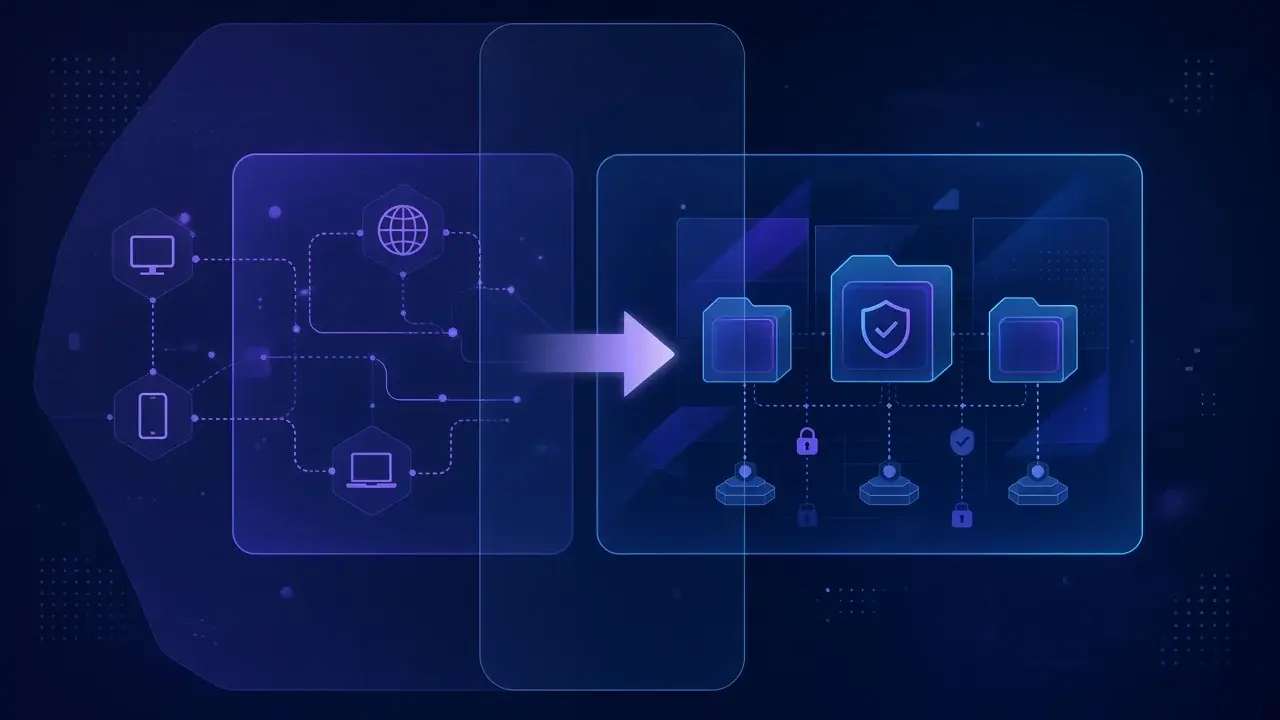
What authorization checks do Claude's new MCP features need? Three. MCP Tasks keep running after the user's turn ends, so every tasks/get, tasks/update, and tasks/cancel must be bound to the principal that created the task and checked again, including the tasks/get that returns the result. Elicitation is a consent prompt, not an allow decision, so policy decides when a person must approve, routes that step into an approval workflow, and then authorizes the action itself. Skills over MCP can ship instructions tailored per user or organization, so skills/list and every skill load must be scoped per identity, the same way you already think about tools.
What shipped on November 24
On November 24, 2026, Anthropic announced that MCP Tasks and Elicitation are generally available in Claude and Claude Code for Pro, Max, and Ultra plans, rolling out to Team and Enterprise organizations. Skills over MCP is in public beta: on by default for Pro, Max, and Ultra, available to Team plans once an admin enables it, and coming soon to Enterprise. All three are part of the open Model Context Protocol or its extensions, so compatible clients and servers can implement them.
The launch post covers what servers can now do: run long work in the background, pause for sign-off "like spending money or deleting data," and ship playbooks next to tools. It skips the authorization checks. Start from the rule we used in zero trust for AI agents: no agent action is trusted by default, and a session allowed at the start of a turn is not a blank check for work that finishes later.
MCP Tasks: bind the job to the principal, then check again
Under the Tasks extension (io.modelcontextprotocol/tasks), a server may answer a tools/call with a task (resultType: "task" plus a taskId) instead of a result. The client polls with tasks/get, answers outstanding inputRequests with inputResponses through tasks/update when the status is input_required, and can send tasks/cancel. Status is working, input_required, completed, failed, or cancelled. There is no separate result method; the result comes back inline on tasks/get.
With a synchronous call, authorization and execution happen in the same breath. With a task, the turn ends, the job keeps going, and the result can be ready after the grant expired or the agent was revoked. Authorize only the original tools/call and you have covered the first second of the job and nothing after it.
The spec requires task IDs "with sufficient entropy that a third party cannot enumerate or guess them," and says servers "MUST perform authentication and authorization checks on each task-related request." The 2026-07-28 revision has no tasks/list, so a sloppy list cannot leak other callers' tasks. But the spec also lets servers use task IDs as bearer tokens for their own state, and it says nothing about a grant revoked mid-run. That part is your policy.
So bind the task. At creation, record the person the agent is acting for, the agent identity, and the task description approved at consent. Every lifecycle request is then checked against that record and the grant's live state.
The confused deputy in tasks/update. A task hits input_required with an elicitation in inputRequests: "Confirm deletion of 1,200 records?" The task ID has leaked into a log line, a shared transcript, or a second agent in the same workspace. That caller sends tasks/update with inputResponses answering accept. If the server only checks that the ID is valid, it runs a destructive action with the original user's authority on someone else's say-so. The spec already says hosts must apply the same trust model to inputRequests as to standalone elicitation and sampling, because "a task is not a higher-trust channel." Enforce it: authorize tasks/update against the creating principal, ignore responses to keys that are not outstanding (the spec says servers should), and never let an inputResponses payload stand in for a person's approval.
Cancel is cooperative. The server must acknowledge tasks/cancel, but "is not obligated to actually stop the work." Authorize and log the cancel, and do not treat the acknowledgment as proof that side effects stopped.
The check below is schematic. It borrows the permit.check(user, action, resource) shape as illustration; it is not a documented Permit SDK method for MCP tasks. The check carries both identities, the person and the calling agent, because an agent that simply inherits the person's full permissions is the pattern to avoid.
// SCHEMATIC, not a documented Permit API for MCP tasks.
// Run on every tasks/get, tasks/update, and tasks/cancel.
async function authorizeTaskRequest(req, task) {
  const caller = identityFromAccessToken(req); // never from request params
  const action = req.method; // "tasks/get" | "tasks/update" | "tasks/cancel"

  const decision = await permit.check(caller.person, action, {
    type: "mcp_task",
    key: task.taskId,
    attributes: {
      createdByPerson: task.createdByPerson, // bound at creation
      createdByAgent: task.createdByAgent,
      callingAgent: caller.agent,
      tool: task.toolName,
      status: task.status, // a completed tasks/get returns the result
    },
  });
  if (!decision.allow) return deny(decision);

  if (action === "tasks/update") {
    // Only answer keys the server is waiting on right now.
    const keys = Object.keys(req.params.inputResponses ?? {});
    if (keys.some((k) => !task.outstandingInputKeys.has(k))) {
      return deny("unexpected_input_response");
    }
  }
  return allow();
}
Log the same fields every time: who delegated, which agent asked, which task and tool, the method, and the decision. Without that provenance, a completed job is an orphaned result with no answer to "who was this still allowed for?"
Elicitation: collect consent, then authorize the action
Elicitation lets a server pause and ask the user for input through the client. Form mode collects structured data against a JSON Schema. URL mode sends the user to an external URL for interactions that must not pass through the client, such as credentials or payments. The user answers accept, decline, or cancel. In the 2026-07-28 protocol, the server returns an InputRequiredResult, and the client retries the original request with the response and an opaque requestState.
accept records what happened in a UI. It says nothing about whether the action is allowed. In form mode it means the user submitted the form. In URL mode it means only that the user agreed to open the URL; the interaction happens out of band. The spec draws the line itself: servers "MUST NOT rely on URL mode elicitation to authorize users for themselves."
So ask two questions. First, does your approval policy send this action, in this context, to a human? If so, route it into a human-in-the-loop approval workflow and use elicitation as the channel. An elicitation response is not a PDP allow decision. Second, once the workflow returns, is the action allowed for this person, agent, and resource? That routing step is separate from the ordinary allow or deny check on the action itself.
The spec's hard rules map straight onto authorization:
- Identity comes from auth. Servers must bind elicitation requests to the client and user identity, and must not rely on client-provided user identification.
- Same user, start to finish. When URL mode runs a third-party OAuth flow, the server must ensure the user who started the elicitation completes it. Otherwise an attacker starts a flow, sends the link to a victim, and the victim's tokens attach to the attacker's session.
- No secrets in forms. No passwords, API keys, access tokens, or payment credentials in form mode; those go through URL mode and never reach the client or the model.
requestState is attacker-controlled. It passes through the client. If it influences authorization, the server must integrity-protect it (HMAC or AEAD, for example) and reject state that fails verification.
// SCHEMATIC. The approval routing helper is illustrative,
// not a documented Permit SDK method for MCP elicitation.
const caller = identityFromAccessToken(req);

const needsHuman = await approvalRouting.requiresApproval({
  person: caller.person,
  agent: caller.agent,
  tool: tool.name,
  trustLevel: tool.trustLevel,
});

if (needsHuman) {
  const approval = await approvalWorkflow.collect({
    requestedBy: caller,
    channel: "elicitation", // elicitation carries the prompt; the workflow records it
  });
  if (approval.status !== "approved") return deny(approval.status);
  if (approval.approver.id !== caller.person.id && !approval.approver.isAdmin) {
    return deny("approver_mismatch");
  }
}

// Consent collected. The action still needs its own decision.
return permit.check(caller.person, tool.action, resource);
Permit MCP Gateway already has this shape for ordinary tool calls. Admins can require approval per tool, for every tool on a server, or above a trust level, and held calls wait on an Approvals page. A person can turn on "Ask me before this agent changes or deletes anything," so tool calls that change or delete data wait for that person's approval. When the optional Guardian is unsure, an admin setting decides whether the call is denied or waits for a human. Elicitation should feed that kind of workflow.
Skills over MCP (io.modelcontextprotocol/skills) lets a server expose Agent Skills: a directory with a SKILL.md and optional supporting files. Servers that declare it must implement skills/list and skills/get; files are read through resources/read. Anthropic says skills can carry "playbooks tailored to a user's account or organization," loaded only when needed.
A tool is a capability; a skill is instruction. Once loaded, it tells the model what to do next and which tools to chain, and it can ask for host-side grants such as allowed-tools. That makes skills a prompt-injection surface arriving through a channel the host was built to trust. A tenant's skill leaking to another tenant exposes process and maybe data. A mis-scoped skill reaching the wrong agent can steer it without an exploit.
The spec gives you room to do this right. Servers "MAY return empty or partial listings," so skills/list can return only what this person and agent may see. But listing is not loading: servers must answer skills/get for every skill they serve, and hosts must support loading by URI, "including skills that do not appear in a listing." So authorize skills/get and every resources/read on skill files too. Our suggestion: for a skill this identity may not use, return the same -32602 you return for an unknown URI, so the error does not confirm the skill exists.
Then fix caching. "public" cacheScope means any client, gateway, or proxy may serve the response to any user. A per-user or per-tenant list should be "private", which forbids sharing caches across authorization contexts. The spec examples use "public"; copy them into a multi-tenant server and you have built a cross-tenant leak with excellent hit rates.
On the host side, the spec requires treating skill content as untrusted, tagging it with its originating server, explicit per-skill approval before host-side code execution or grants like allowed-tools, and fresh consent before activating a nested skill. Persisted approval binds to the manifest's file URIs and SHA-256 digests, so a changed file revokes it. Skills marked "dynamic" have no stable digests, and hosts may decline them.
// SCHEMATIC, not a documented Permit API for MCP skills.
async function listSkills(req) {
  const caller = identityFromAccessToken(req);
  const visible = [];
  for (const skill of catalog) {
    const d = await permit.check(caller.person, "skills/list", {
      type: "mcp_skill",
      key: skill.uri,
      tenant: skill.tenant,
    });
    if (d.allow) visible.push(skill);
  }
  return { resultType: "complete", skills: visible, ttlMs: 300000, cacheScope: "private" };
}
// Run the same check with "skills/get" or "resources/read" on every load.
Compare tools. Permit MCP Gateway documents that it returns all upstream tools in tools/list and enforces on each call, so an agent can see a tool it cannot call. That is documented behavior for tools. Don't copy it onto skills. A visible tool the agent cannot call is a denied request. A visible skill is text the model may already be reasoning about. A registry tells you which servers exist; once a server is connected, list and load are runtime actions.
Interrogated intent and defense in depth: one job, end to end
One scenario ties it together. A person asks an agent to research churn risk across their team's accounts, with the approved task description "research account health." The server returns a task.
- Minute 0.
tools/call is authorized. The server binds the taskId to the person, the agent, and the approved task description.
- Minute 4. The agent loads
skill://renewals-playbook/SKILL.md, tailored to the person's organization. skills/get and resources/read are checked per identity; the same URI from another tenant gets -32602. The host asks before granting the skill's allowed-tools.
- Minute 9. An admin revokes the agent's grant. The task is still
working. Nothing in the Tasks spec stops it; your policy has to.
- Minute 12. The playbook says "update the renewal stage." The task flips to
input_required with an elicitation to confirm writes. Research just became a write. Policy routes it to approval, and the tasks/update carrying inputResponses is checked against the creating principal and the live grant. The grant is gone, so it is denied, whoever clicked accept.
- Minute 15. A
tasks/get would return the completed result. It is checked against the live grant too, so a revoked agent does not walk away with the output.
That is interrogated intent: at each sensitive step, ask whether this action still matches the identity, the grant, and the approved task. Defense in depth means asking on lifecycle methods, elicitation, skill loads, and result delivery, not only at the first tools/call.
Where Permit's documented layers fit today: Permit MCP Gateway documents authorization on tools/call, resources/read, and prompts/get, with approval holds and an optional Guardian review layer. Coding Agents Gateway, generally available, asks a related question at another layer: may this agent process reach this destination with this payload? Endpoint and process-level enforcement is listed as "Talk to us" in the docs. Use these layers with the method-level checks above, and do not assume they inspect tasks/get or skills/list; the docs do not say so.
Authorization checklist for the new MCP methods
| Moment |
What to verify |
If you skip it |
Task created from tools/call |
Bind the taskId to person, agent, and approved task description |
Later requests have no principal to check |
tasks/get, tasks/update, tasks/cancel |
Identity from the token; authorize against the binding |
Anyone holding the taskId can read, steer, or cancel |
tasks/get on a completed task |
Re-check grant, expiry, and revocation |
A revoked agent still receives the work |
inputResponses in tasks/update |
Only outstanding keys, only from the creating principal |
A confused deputy answers accept with borrowed authority |
tasks/cancel acknowledged |
Log it; do not assume side effects stopped |
A job you think is dead is still writing |
| Policy requires a human |
Approval workflow, with elicitation as the channel |
accept gets treated as an allow |
| Elicitation completes |
Identity from auth; in URL auth flows, same user start to finish |
Consent or tokens attach to the wrong person |
requestState echoed back |
Integrity-protect it, reject failures |
A modified client rewrites authorization state |
| Form vs URL mode |
Secrets and payments only in URL mode |
Credentials land in the client and model context |
skills/list |
Per-identity results, cacheScope: "private" |
Playbooks leak across tenants and shared caches |
skills/get, resources/read |
Authorize every load, listed or not |
A known URI bypasses a filtered catalog |
| Skill activation |
Untrusted content; per-skill approval bound to digests |
A skill silently widens what the agent can do |
FAQ
What authorization checks do MCP Tasks need?
Bind every task to the person and agent that created it. Then authorize each tasks/get, tasks/update, and tasks/cancel against that binding, including the tasks/get that returns the final result. A grant that was valid when the task started may be revoked or expired by the time the result is ready.
Is an MCP Elicitation accept an authorization decision?
No. In form mode, accept means the user submitted the form. In URL mode, it only means the user agreed to open the URL. Policy decides whether a human step is needed, an approval workflow records who approved, and a normal allow or deny check on the action runs after that.
Why does Skills over MCP need per-identity scoping?
A skill is instructions that get loaded into the model's context, and skills can be tailored to a user's account or organization. If skills/list, skills/get, or resources/read are not scoped per identity, one tenant can read another tenant's playbooks, and a planted skill can steer an agent it should never reach.
Did the MCP Tasks extension remove tasks/list?
Yes. The 2026-07-28 Tasks extension has tasks/get, tasks/update, and tasks/cancel, and no tasks/list, so a server cannot leak other callers' tasks through a list. There is also no separate result method. The final result comes back inline on tasks/get once the task is completed or failed.
What cacheScope should a per-user skill list use?
private. Under MCP caching, public means the response holds no user-specific data and any client, gateway, or proxy may serve it to any user. A list filtered per user or tenant should be private, so caches are not shared across authorization contexts. The spec also warns not to rely on cacheScope alone for access control.
Does Permit MCP Gateway enforce tasks, elicitation, or skills today?
Not according to its current docs. The documented checks run on tools/call, resources/read, and prompts/get, with approval holds and an optional Guardian on top. We make no claim of first-class enforcement for tasks/get, tasks/update, tasks/cancel, elicitation, or skills/list. Those methods still need the checks in this article.
These features are good news: agents that work longer, ask before risky actions, and carry real playbooks. They just move the authorization question from "may this agent call this tool?" to "may this agent still do this, for this person, right now?" The same identity and consent questions show up at the OAuth client layer, which we covered for Google Workspace MCP. If you are wiring any of this into a server, send us the edge cases you are hitting.