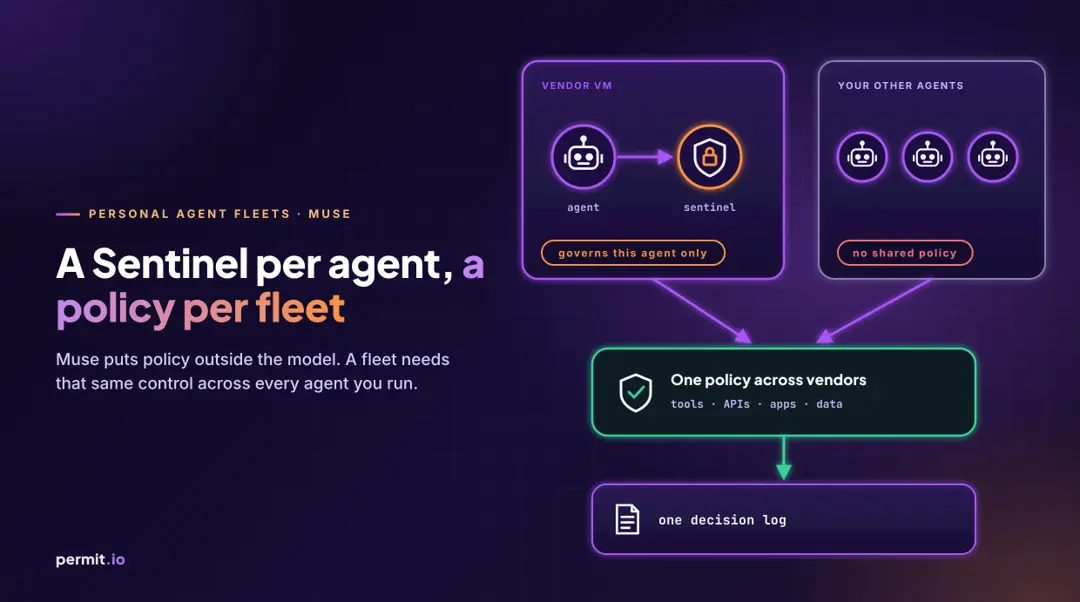
TL;DR: Muse is one of the better-designed personal agents on security: a separate Sentinel agent decides every connector action and every network request, the agent only sees surrogate tokens, and approvals are scoped capabilities. That is policy outside the model, which is what we recommend. Sentinel governs Muse, though, and only Muse. Once you run Muse next to other agents, you need the same identity, policy, and audit log across all of them, enforced at the tools, APIs, and apps they share. Software Factory Security describes how to do that.
What is Muse, and what can it touch?
Meta introduced Muse on September 8, 2026 as a personal AI agent that does the work instead of answering questions. It can send email, book travel, open a browser, fill out forms, and negotiate on a person's behalf. It keeps working after you close the app, remembers details you mentioned once, and makes suggestions unprompted. You talk to it in the Muse app or in WhatsApp.
Each Muse runs on Muse Secure VM, a dedicated cloud machine with its own browser that holds the agent, your data, and the credentials for any service you connect. Meta's engineering write-up describes an agent that "launches swarms of subagents, builds its own tools, and edits itself."
That is a lot of reach for one agent: mail, calendar, browser sessions, payments, and connectors to other Meta apps and third-party services.
What does Muse get right about agent security?
Meta's security write-up starts from the right assumption: the system is designed "to assume the agent may be under attack and limit the potential damage." The pieces that follow are worth reading even if you never use Muse.
- Sentinel is a separate agent with the final say. It is "the sole permission authority for connector actions and network egress." Muse proposes; only Sentinel can grant. Sentinel checks the connector policy you set and decides allow, deny, or ask you.
- The agent never holds real credentials. Code in the runtime sees a surrogate token. Sentinel swaps in the real credential at the network boundary, after the request is authorized.
- Approvals are scoped. Meta calls them "strict capabilities, not conversational suggestions": one-time, session-scoped, task-scoped, time-bounded, or perpetual, and bound to a specific connector and use case.
- Payments use single-use cards tied to a merchant, an amount, and a time window.
Meta is also candid that "prompt injection remains an open problem in the industry" and that Muse "will sometimes make mistakes." The design bounds the damage instead of promising there will be none.
What did the September 0-day show?
Two weeks after launch, macOS researcher Patrick Wardle found that any local app or terminal command could change an undocumented Muse setting that controls where dictation is sent. Pointing it at an attacker's server exposed the Muse authentication token and let the attacker steer the agent with the permissions the user had already granted, as Ars Technica reported. Meta shipped a hotfix. The same week, Amazon started blocking Muse from shopping on its site.
We wrote about the Muse 0-day in September. The lesson still holds: once a session is hijacked, the permissions a user already approved are the blast radius. Consent at setup time does not answer whether a specific action, right now, for this task, should happen.
Why does Muse become a fleet problem?
Most people who try Muse do not stop at Muse. They also run a coding agent, a work assistant, maybe a self-hosted agent on a home server. Each one has its own permission model, its own approval prompts, and its own activity history.
Sentinel is excellent at one question: should Muse do this? It has no view of the other agents. That leaves gaps that no single vendor can close:
| Question |
Inside Muse |
Across your fleet |
| Who is acting? |
Muse, for you |
Several agents, all looking like you downstream |
| What may it do? |
Your Muse connector policy |
A different rule set per agent |
| Was it approved? |
Sentinel's approval state |
Approvals scattered across apps |
| What happened? |
Muse's audit trail |
No single record |
Standing access accumulates. A perpetual approval in one agent and a broad OAuth grant in another add up to more reach than you would ever grant on purpose. Prompt injection travels too: a hostile email can be read by any agent that has your inbox, not only the one with the best defenses. And when something goes wrong, the downstream system's log says your account did it. We covered why the agent's own explanation is not evidence in you can't audit an AI agent by asking it.
How does Software Factory Security apply here?
Software Factory Security was written for fleets of AI coding agents, and its five controls map closely to what Sentinel does for one agent. As shared in our docs: give every agent its own identity delegated from a human, deny by default, check every call against policy outside the model, stop risky steps for a person, and keep one decision log.
The difference is scope. Instead of one policy per vendor, the identity and the policy sit at the systems every agent reaches:
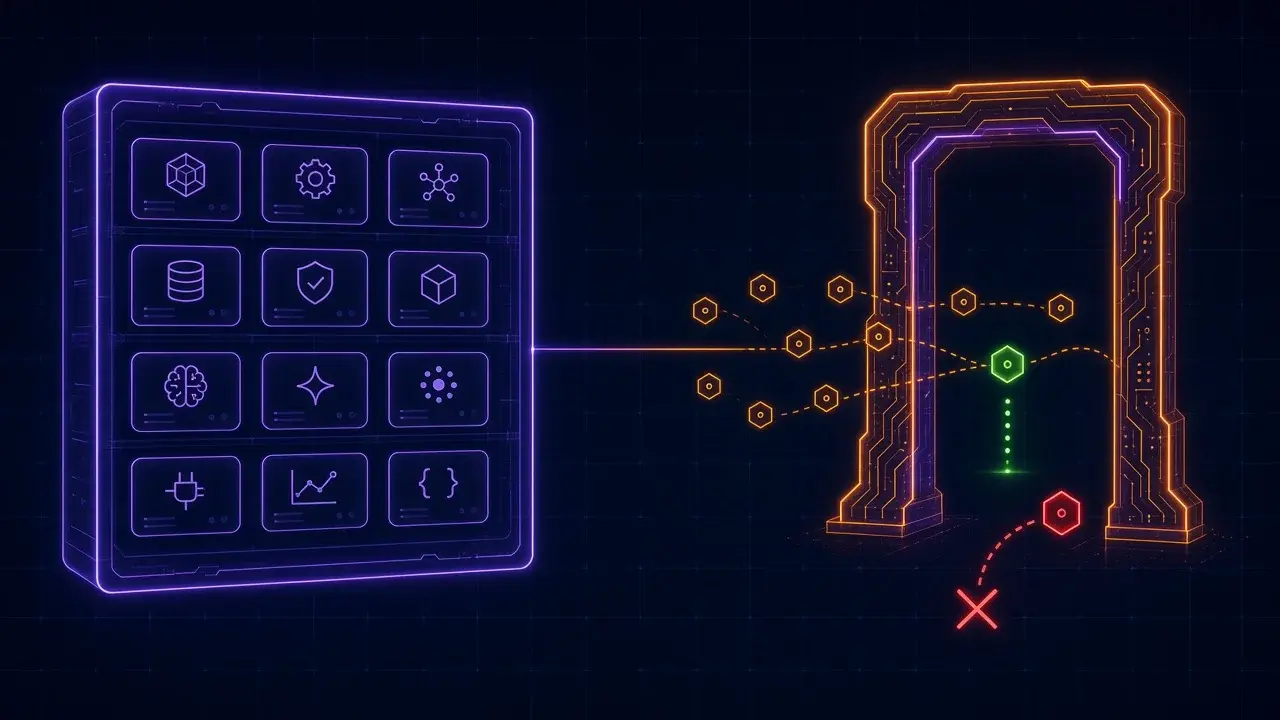
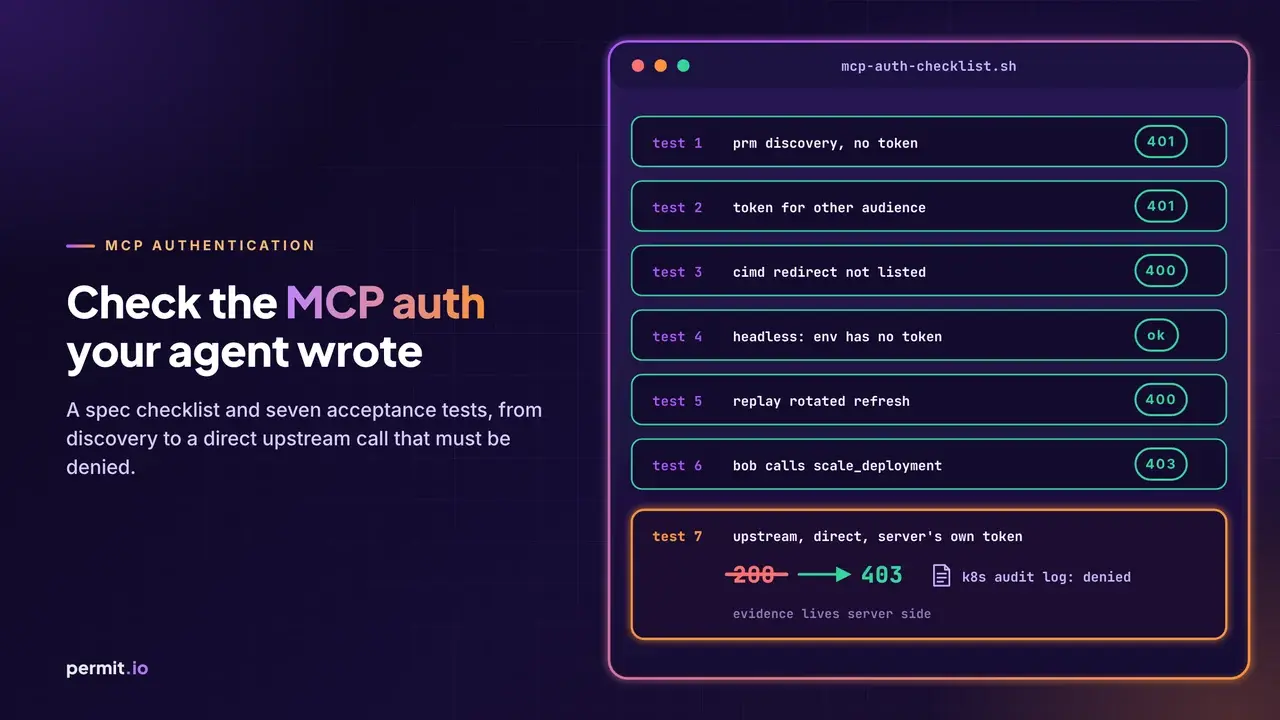
- At the tool layer, for agents that call tools over MCP, Permit MCP Gateway authenticates the person behind each agent, collects consent, checks every tool call against policy, enforces a trust ceiling per tool, and logs the decision. Upstream tokens stay vaulted, the same idea as Muse's surrogate tokens.
- At the API layer, an HTTP egress proxy and PDP decide whether a delegated token may reach an endpoint.
- In your own apps and data, the Permit PDP treats each agent as its own subject.
Each agent identity binds the human who delegated the work, the client the agent runs as, the workflow, and its declared intent. As shared in our docs, "Revoke the human and every agent acting for them loses access on its next call." That is the cross-vendor version of revoking a Muse connector.
The Software Factory Security blueprint has the full architecture, and agents as privileged identities covers why an agent with your access deserves the same controls as a privileged account.
A checklist for running Muse in a fleet
- Keep Sentinel's prompts on, and prefer task-scoped or time-bounded approvals over perpetual ones.
- Connect only the services Muse needs for the goals you give it.
- Keep Muse up to date; the 0-day fix came as a hotfix.
- List every agent that has your inbox, calendar, or payment methods, not only Muse.
- Where agents reach shared tools or your own APIs, put a policy check there that names the agent as well as you.
- Require a human for sending, paying, deleting, and sharing data at that layer too.
- Keep one decision log across agents so you can answer which agent did what.
Where to start
Take the highest-reach system your agents share, usually email or a company API, and put a per-agent policy check and a log in front of it. The Software Factory Security page explains the five controls and where each runs.